Camping im Busch mit Krokodilen und Pavianen
von Christian Heinz
/
When I think of hunting trips to South Africa, I usually picture luxurious lodges, ice-cold drinks by the pool, and room service. As a widely travelled bowhunter, however, that only holds limited appeal for me. What I truly crave is raw, unfiltered adventure. Fortunately, I know two South African guys who share the same outlook: Brenden and Armand. Both are professional hunters, outfitters, and passionate bowhunters. Together we came up with a plan for a traditional bush camp with tents, as authentic and close to nature as possible, while still offering the level of service and safety that European visitors require in the African wilderness.
Text: Christian Heinz
An Almost Perfect Hunting Trip with Obstacles
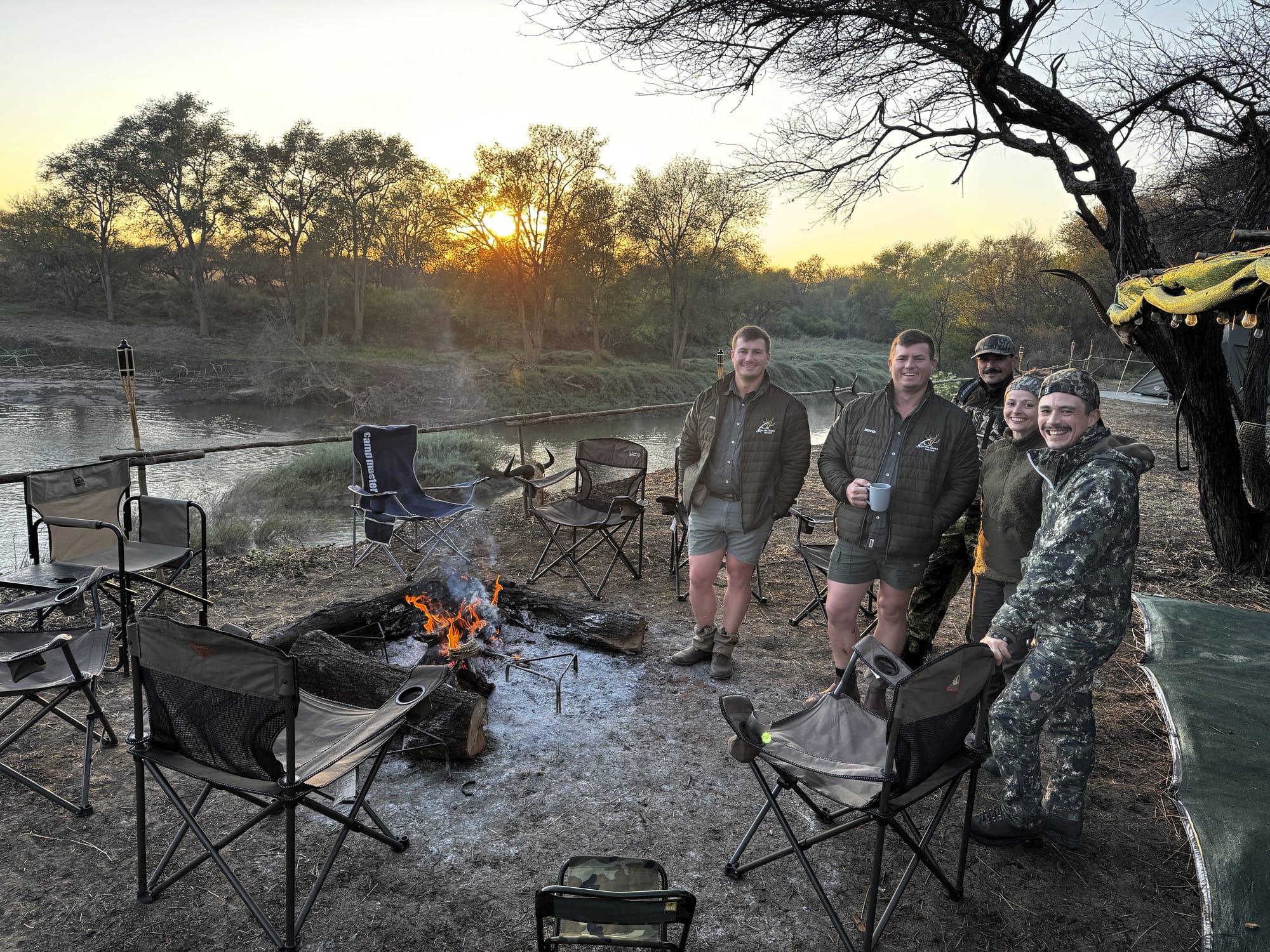
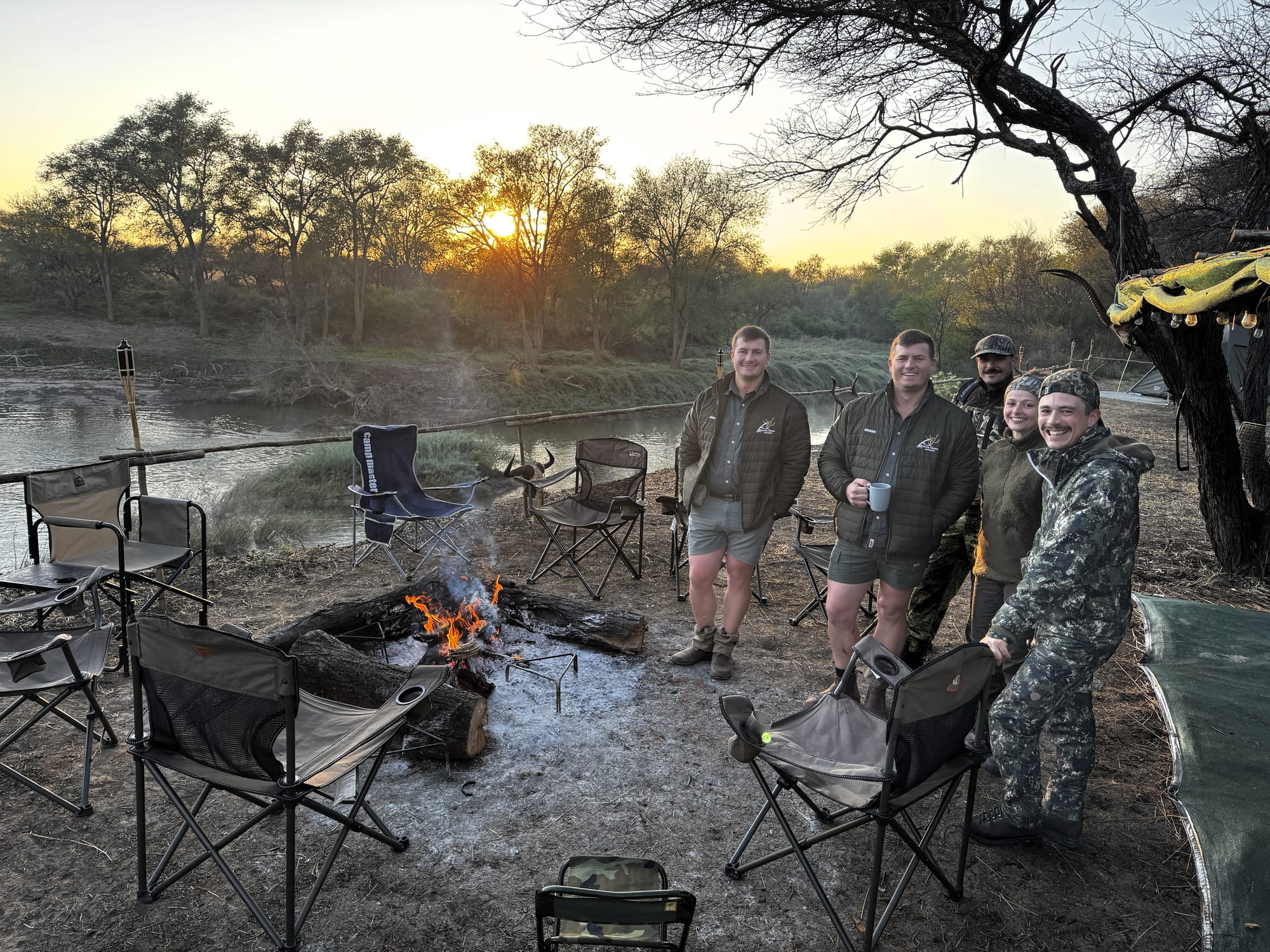
Like a glowing golden orb, the African sun slowly emerged above the treetops, flooding the landscape with its incomparable light. We stood around the warming campfire, steaming mugs of coffee in hand, quietly discussing the plan for the day. Behind us were the tents, still covered in tiny droplets of moisture, where the steady murmur of the Limpopo River had lulled us to sleep the night before.
The air was fresh and carried the unmistakable scent of damp bark, mixed with the resinous aroma of Mopane trees. The birds had already begun their morning concert in the surrounding branches. They chirped, sang, and whistled enthusiastically against the subdued roar of the river flowing below us at the foot of the steep bank, right on the border with Botswana.
The previous night, we had watched crocodiles lying motionless in ambush only a few metres away, illuminated by our flashlights. The South African professional hunters remained stubbornly loyal to their unwritten code, which apparently requires them to wear shorts at all times. In the cold morning temperatures, they risked bladder infections or worse in the name of professional pride.
The cloudless sky promised excellent hunting conditions on that early October morning in the African bush. Matthias had already enjoyed success on a fine warthog boar and later provided us with a delicious Egyptian goose for dinner. Several others in our group had also been successful, and everyone looked relaxed and full of anticipation for what the day might bring. At least, that was how all of us had imagined the entire adventure would unfold.
Unfortunately, Modimo, the creator and ruler of the world in the beliefs of the local Tswana people, seemed to have different plans for us. Whether it was Modimo or simply climate change, the rainy season had arrived several weeks earlier than expected. As a result, we spent most days battling mud, rain, wind, and cold temperatures.
Only two of the six hunting days offered truly ideal conditions. African game animals generally prefer to stay hidden during bad weather, and there is little reason to visit a waterhole when large puddles can be found throughout the area. Despite these challenges, every hunter in the group enjoyed success, thanks largely to thorough preparation and the extensive experience of our guides.
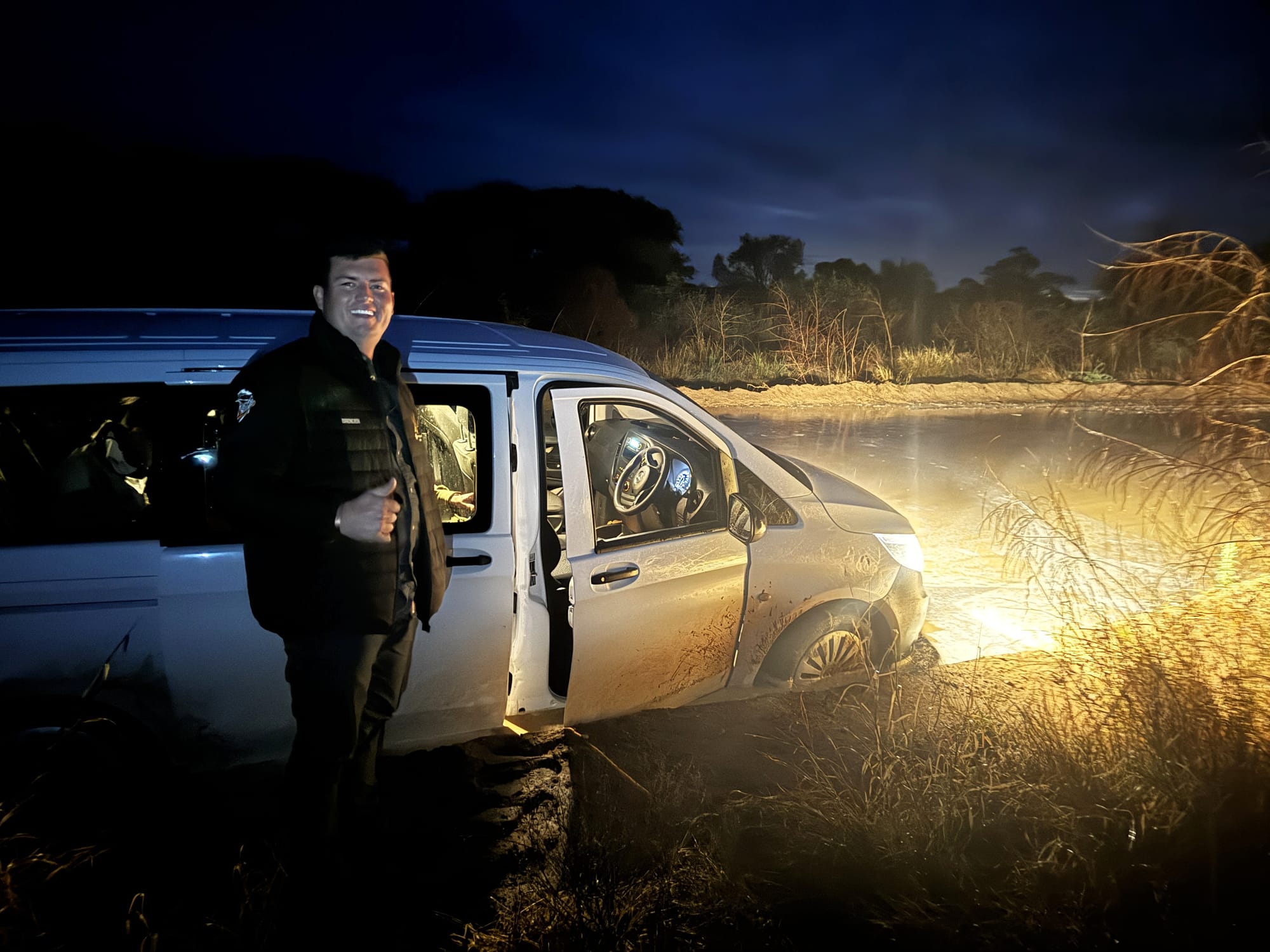
Even the drive to the hunting area began with an unexpected but remarkably thorough undercarriage wash for the van transporting us from Johannesburg Airport to the edge of the concession. On what is normally a bone-dry sandy track, the vehicle became hopelessly bogged down in soft mud. Only with the assistance of a Land Cruiser, a tow rope, and plenty of horsepower were we able to continue our journey to the farmhouse that served as our intermediate stop. From there, we transferred into proper off-road vehicles and headed deeper into the bush.
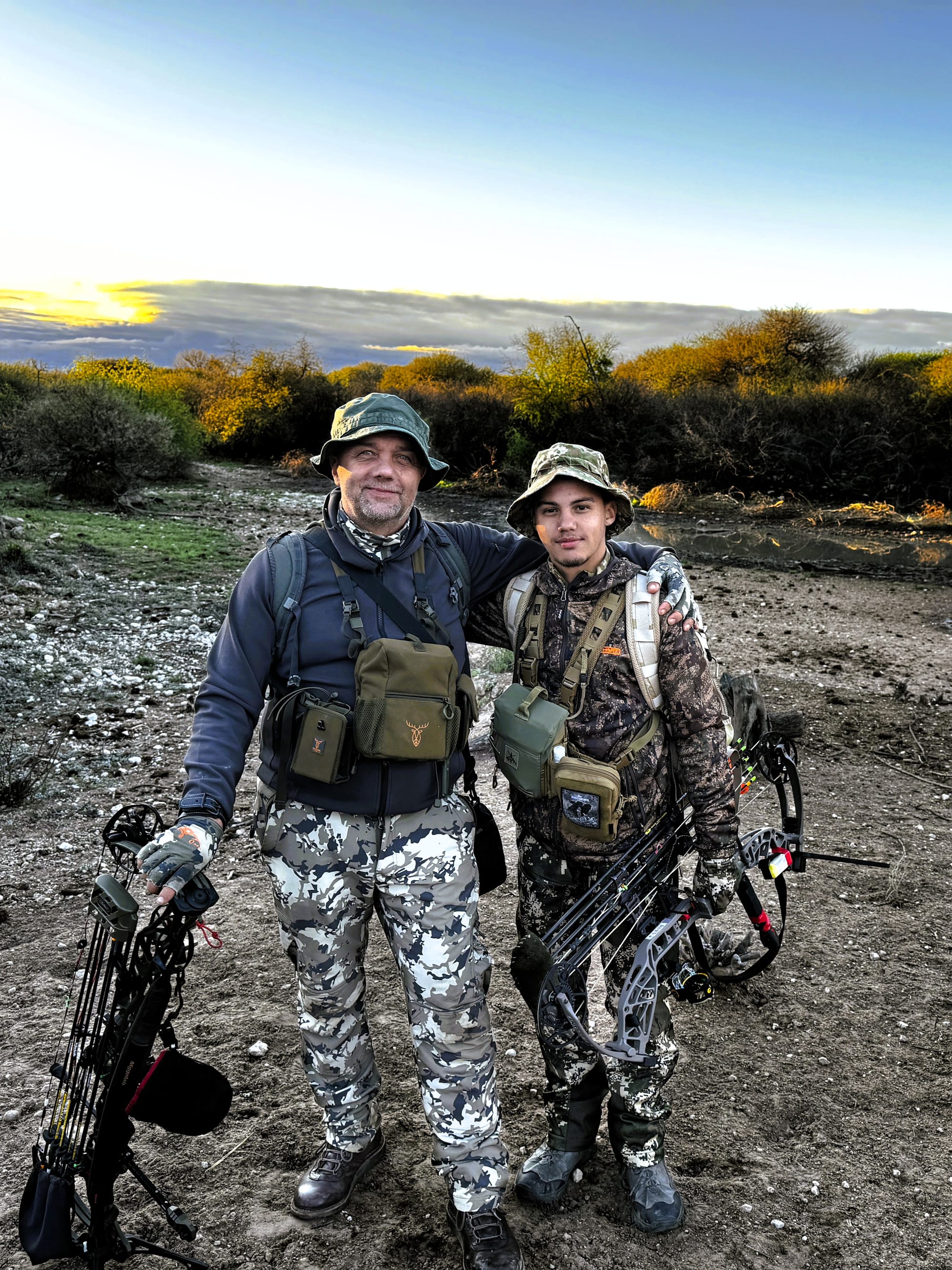
For me, this trip was especially significant. Alongside Sophie, who hunted exclusively with a rifle, Matthias, and Michael, my son Ernesto was joining us for the first time. Sharing an African hunting adventure with my son had been a dream of mine for many years. It may sound like a slightly sentimental father-and-son story, but the experience etched itself permanently into my memory and strengthened the bond between us even further.
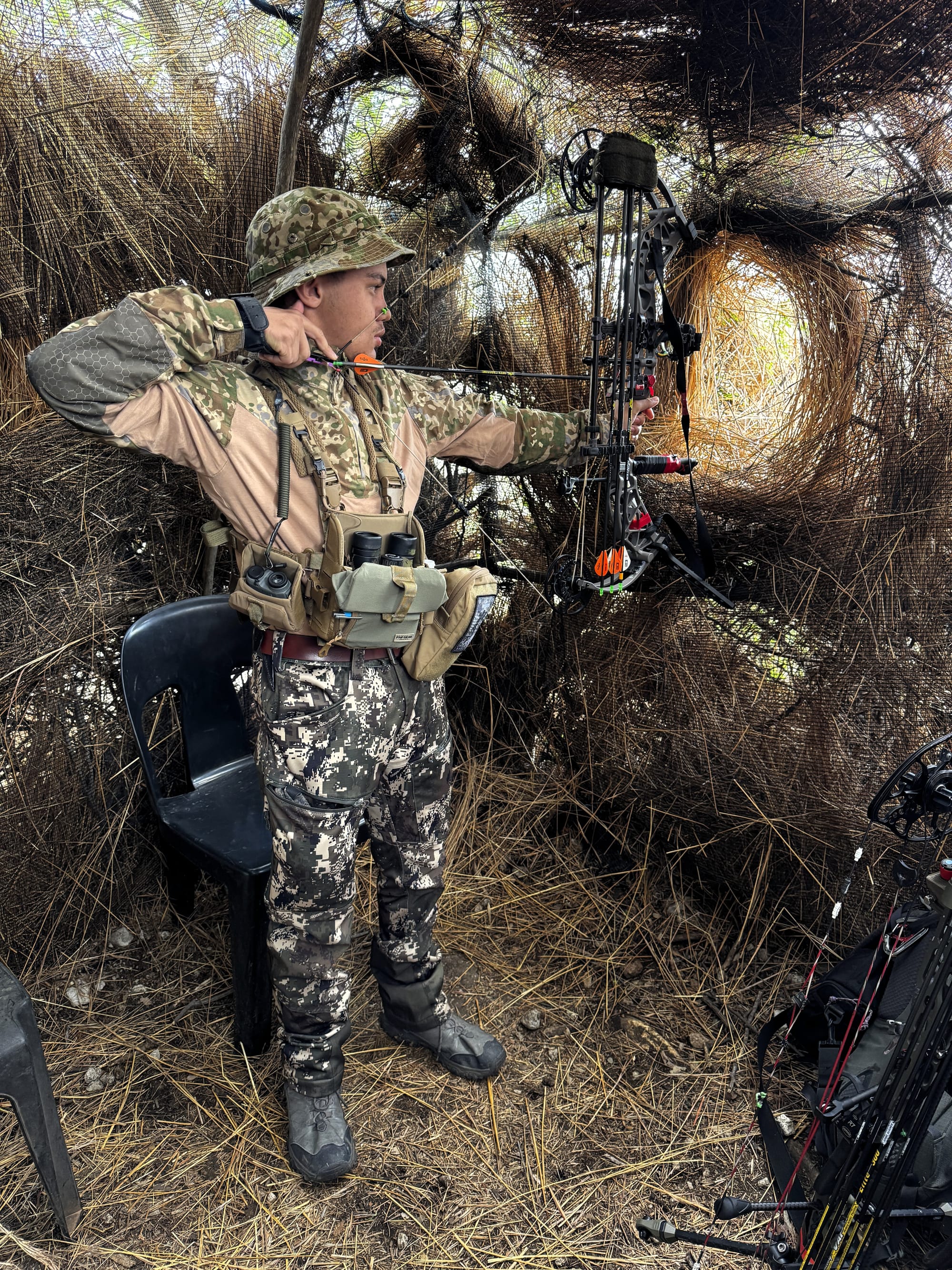
During the day, we bowhunters spent most of our time in blinds constructed entirely from natural materials such as branches and grass. Positioned near waterholes and feeding stations, these hides blended almost invisibly into the environment. Sophie, armed with her rifle, preferred a walk-and-stalk approach and spent most days on the move with her guide. Ernesto chose a combination of bow and rifle hunting.
At night, Matthias, Ernesto, and I either sat in blinds around the camp or travelled to a neighbouring property that specialised in hunting bushpigs, porcupines, and hyenas. Unfortunately, our results there fell short of expectations. We regularly observed impressive bushpigs that often remained remarkably relaxed at the bait sites. However, the blinds and lighting systems had been designed primarily for rifle hunters, putting us bowhunters at a disadvantage. We did, however, have opportunities to hunt porcupines.
A Baboon with Teeth to Make Any Leopard Jealous
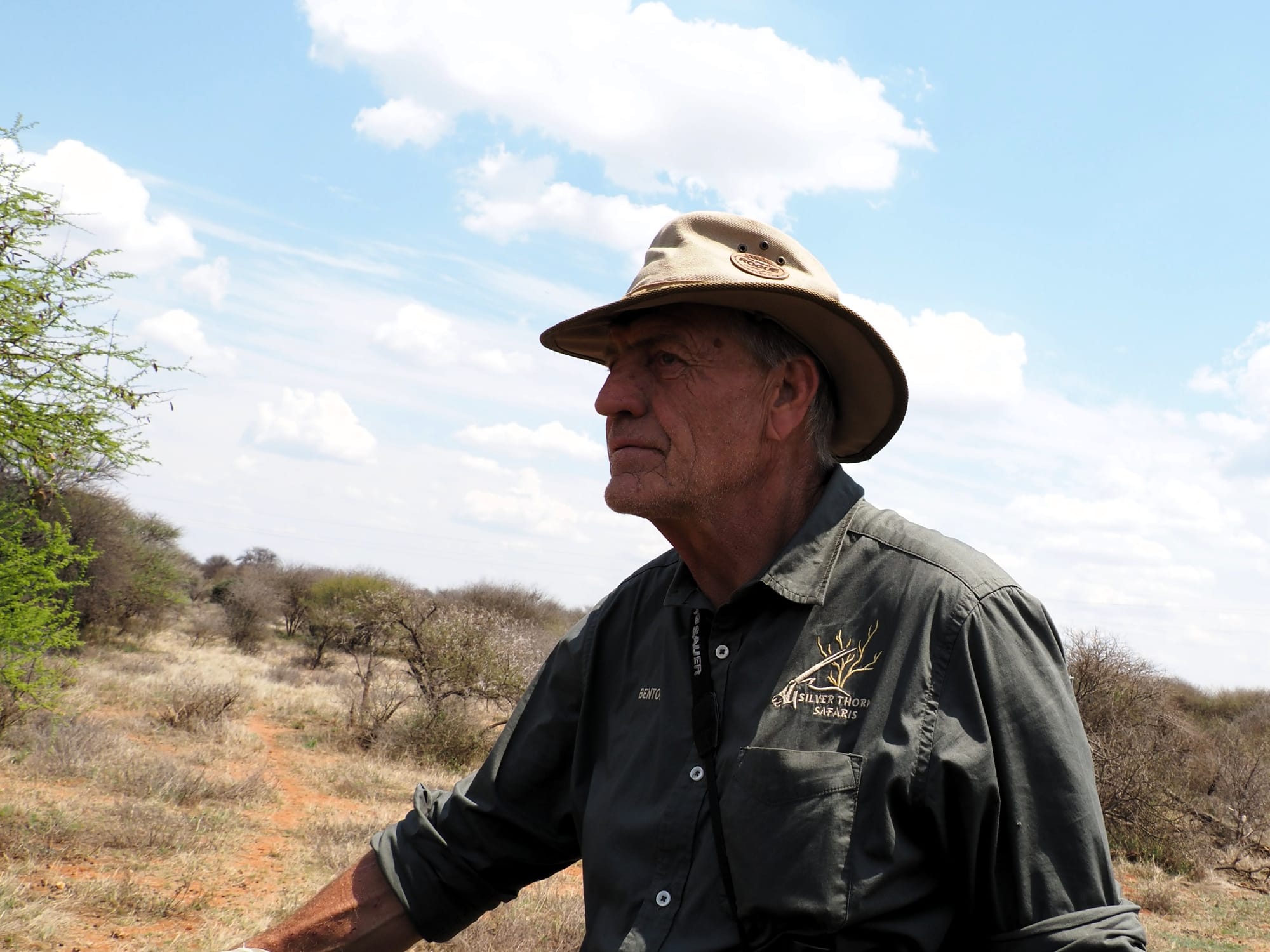
For the first few days, I shared the blinds with my son, naturally giving him priority whenever an opportunity presented itself. After all, I wanted him to take his first African animals with a bow. Our guide was Benton, Brenden and Armand's father.
At the time, Benton was sixty years old, tall, lean, and tough as nails. His deeply weathered face, tanned and furrowed by decades of African sun and countless cigarettes, immediately spoke of experience. In my estimation, he was not only an exceptionally capable guide for bowhunters but also an intelligent and genuinely likable man. Just how extensive his experience really was became apparent during one particular morning hunt when he and I sat alone in a blind.
That baboons are generally unpopular neighbours among farmers is common knowledge throughout southern Africa. What I did not know was that there was a particularly personal score to settle on this property.
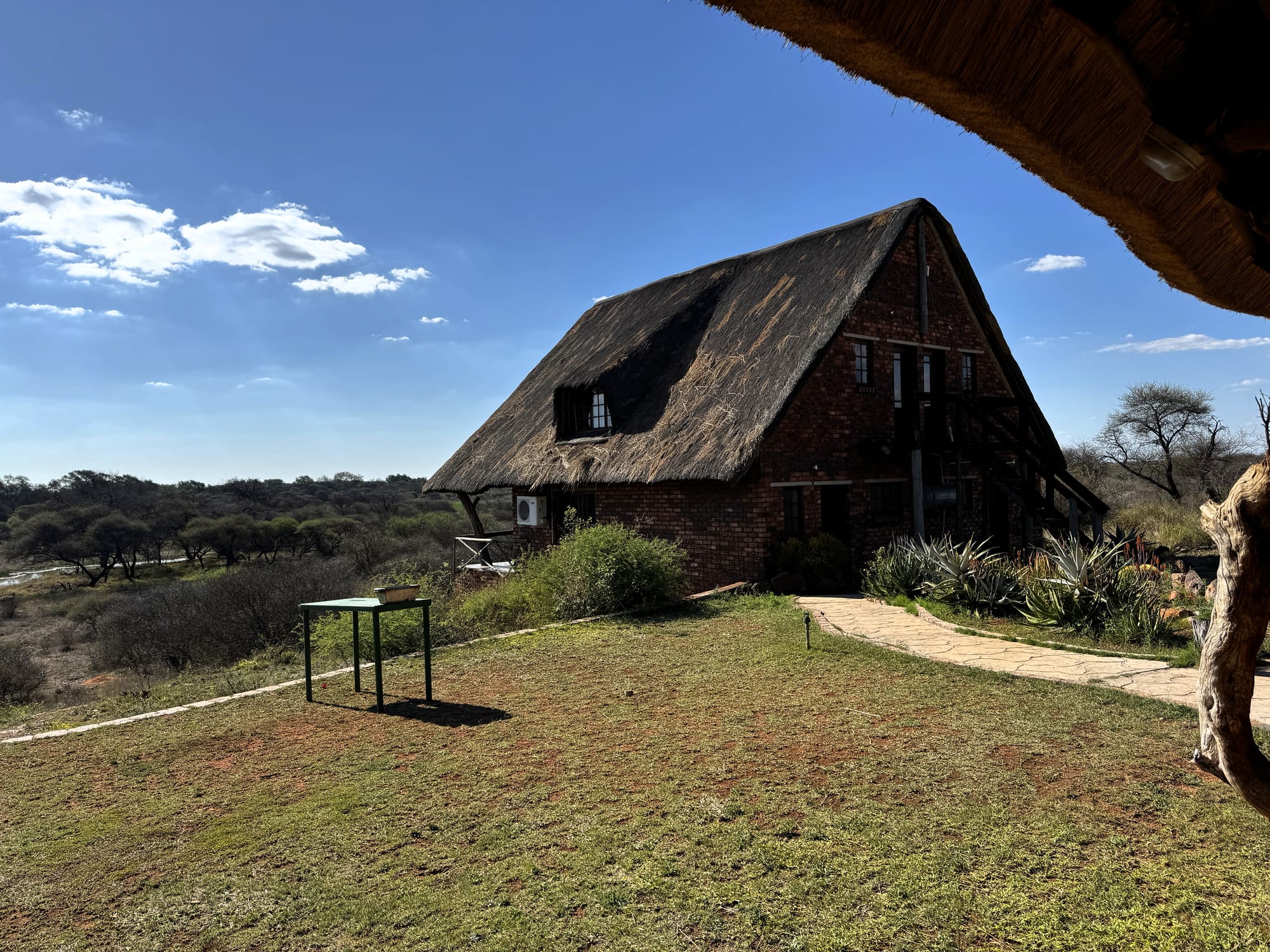
We learned about it during our visit to the farmhouse approximately five kilometres from camp. The day before our arrival, a troop of baboons had virtually dismantled sections of the main house's reed roof while searching for insect larvae. The farmer therefore made it abundantly clear that he would appreciate every effort to reduce the local baboon population.
I remembered his grim expression and flashing eyes as we spotted a troop of around twenty baboons cautiously emerging from waist-high grass and approaching the bait site. Benton immediately gestured for me to move as far back as possible into the darkest corner of the blind and remain absolutely motionless. Leaning close, he whispered his instructions.
"The lower-ranking animals will come out first. Then the more dominant ones. The troop leader will be the last to appear. One of them will act as a sentry and sit on higher ground, probably in that tree to our left. Eight meters to our right is a feeder filled with maize. Once all the others are feeding and drinking, the alpha male will climb onto it. Until then, you stay completely still. Don't even give in to the temptation of peeking out of the blind. Just keep your eyes on the feeder from where you're sitting. When I give the signal, draw your bow and wait until he climbs up. Then aim carefully, without unnecessary movement, and take the shot."
That was Benton's prediction. And it unfolded exactly as he had described.
From my position, I could only piece together what was happening outside from the sounds. Loud squabbles broke out among the baboons over feeding positions. Then things gradually quieted down, replaced by the unmistakable noises of chewing and smacking lips. The animals could not have been more than a few metres away.
Benton watched through a tiny viewing slit in the blind, no larger than one of his eyes. After about ten minutes, he slowly turned his head toward me and gave the signal. I eased my bow back as slowly and quietly as humanly possible. Through the narrow shooting gap, I focused on the elevated feeder, mounted on metal legs roughly seventy centimetres above the ground.
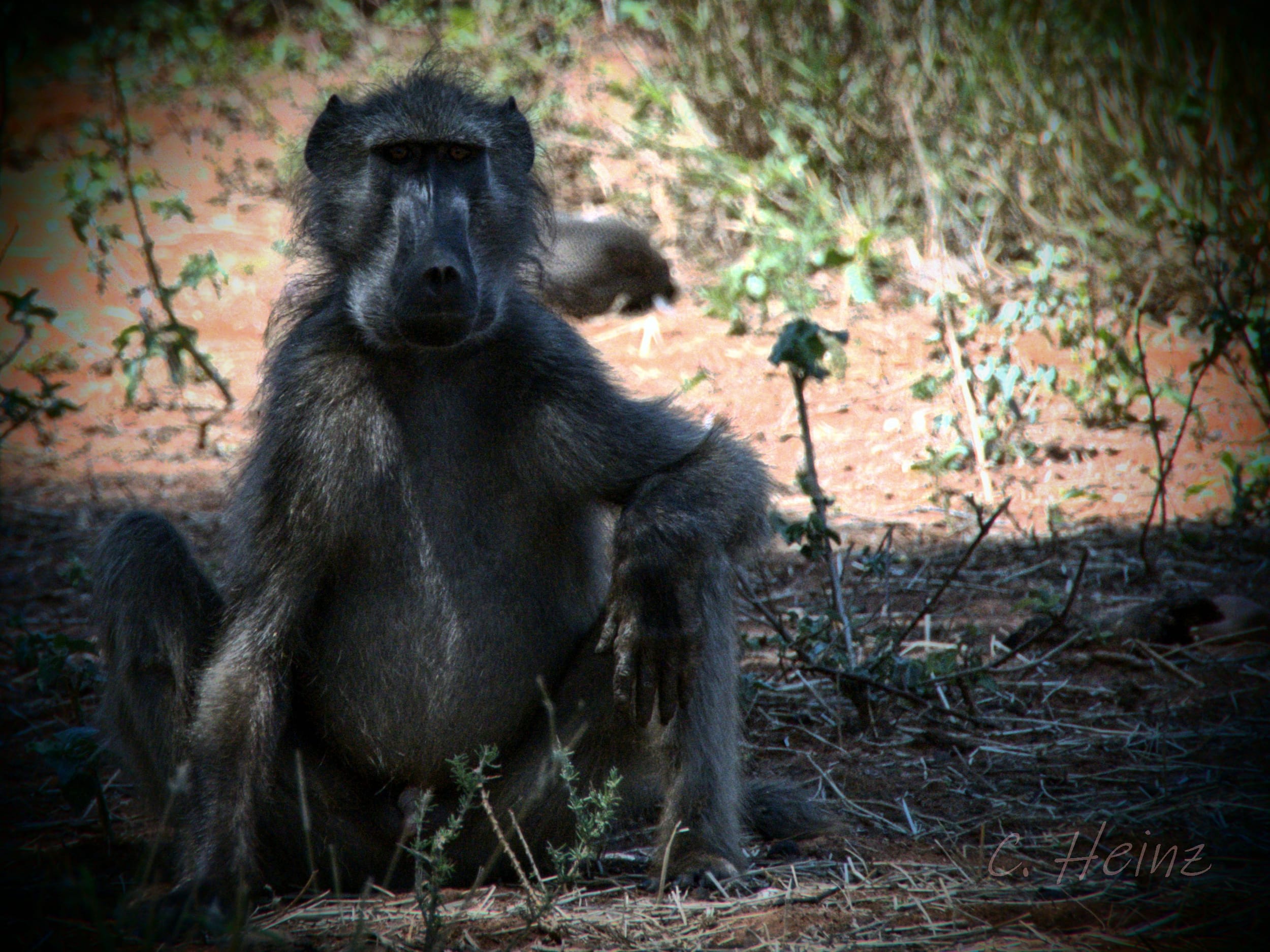
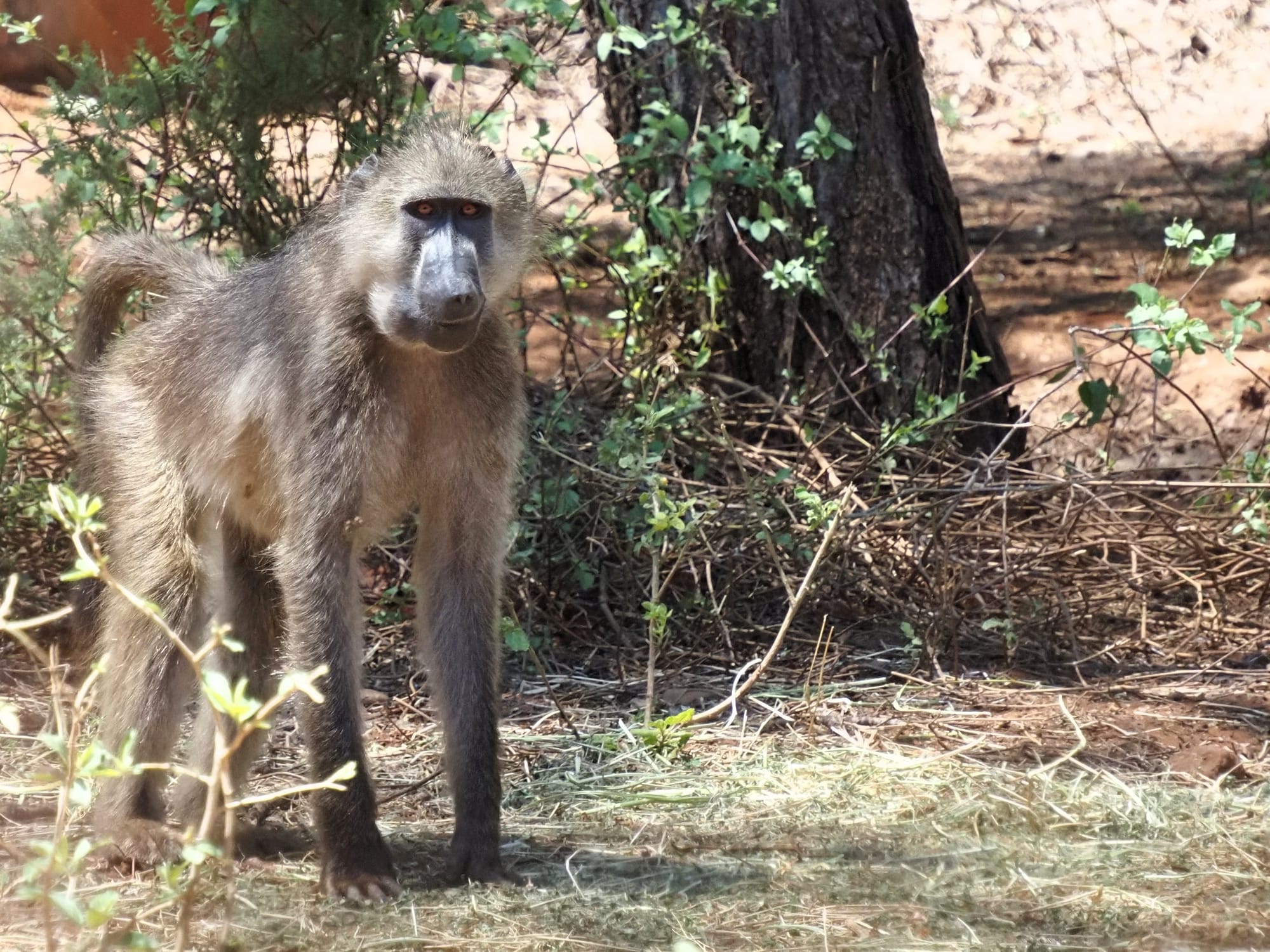
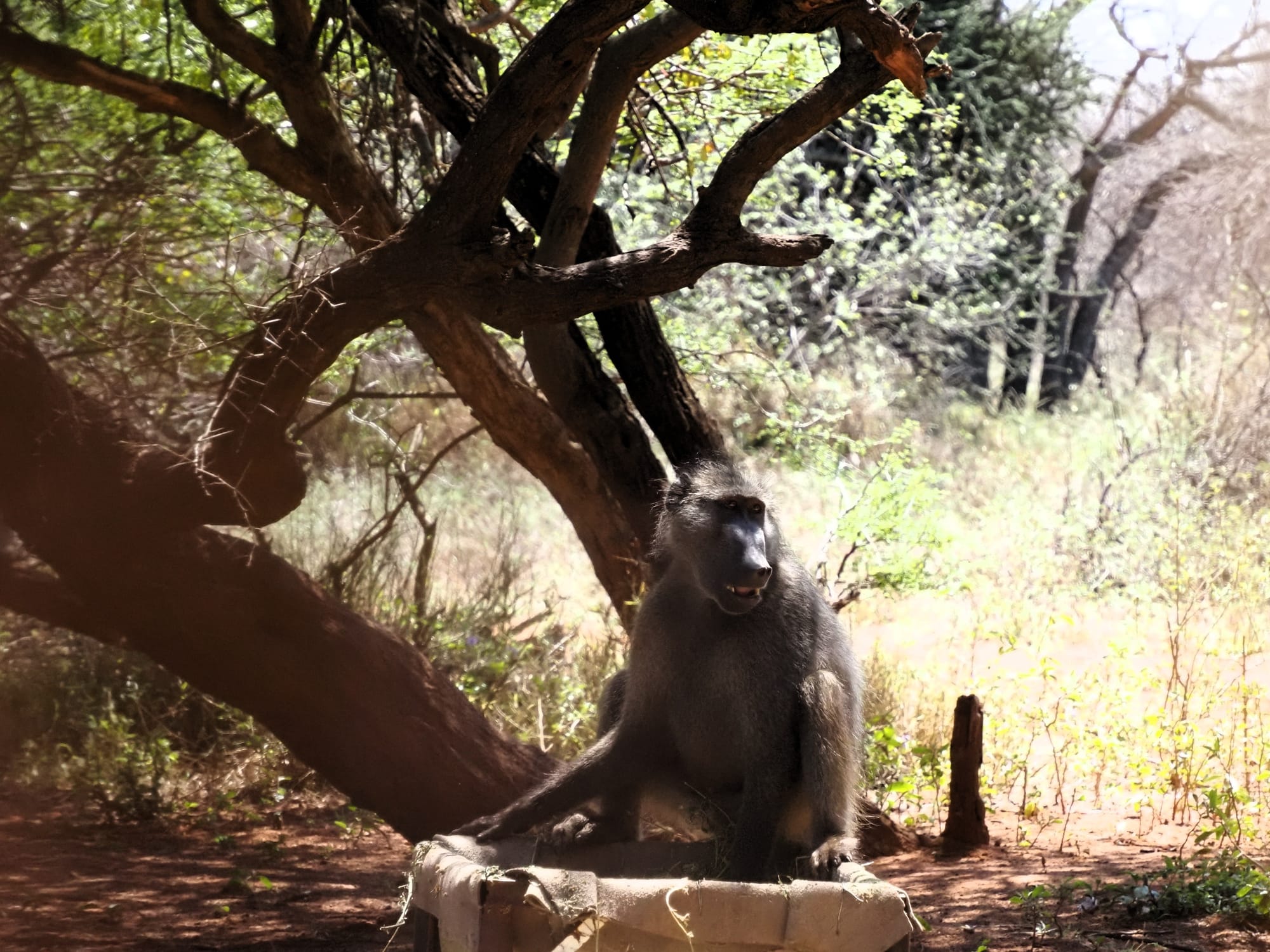
At first, I saw only a hairy arm. Then a massive body appeared, crowned by an enormous muzzle. The baboon settled behind the feeder, scanning in every direction. After a moment, he placed both hands on the edge and effortlessly hoisted himself onto the platform with the grace of a gymnast. There he sat exactly as Benton had predicted, occupying his elevated position with all the confidence of a king surveying his domain while calmly stuffing maize kernels into his mouth.
As he ate, he constantly checked his surroundings. To me, his expression seemed almost smug, entirely satisfied with himself and his position in the social hierarchy. Each time he opened his mouth, his huge canine teeth flashed in the sunlight. I had never seen a male baboon with such a formidable set of teeth. They would have made any leopard jealous.
Then he looked directly into the tiny dark slit of my shooting window. Straight into my eyes. I forced myself to ignore the piercing stare beneath those heavy brow ridges and focused entirely on the shot. Settling the pin in the centre of his chest, I released. The arrow left the string.
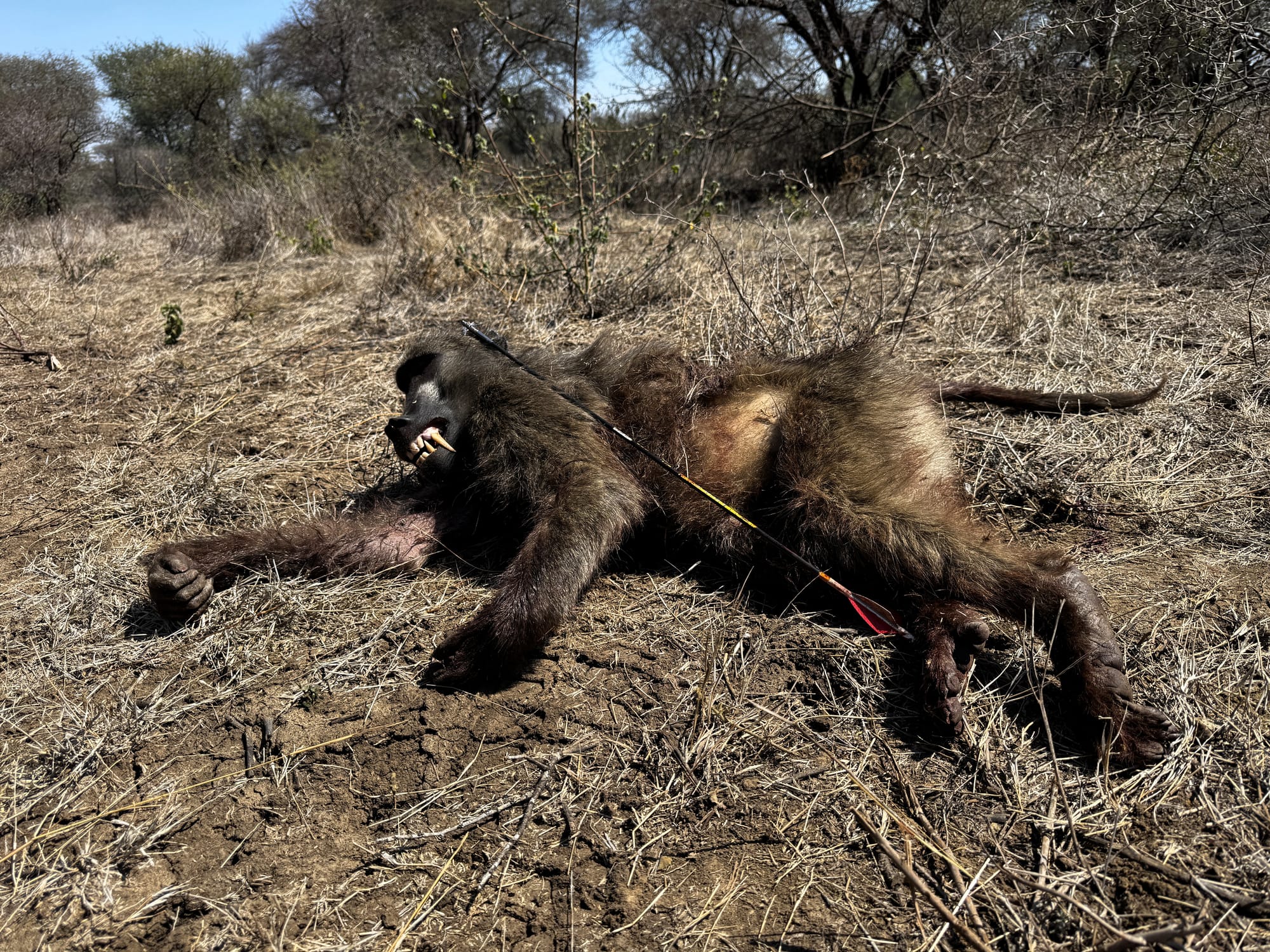
Within less than a meter it accelerated to more than 300 kilometers per hour and struck exactly where I had aimed. A fraction of a second later it exited behind the baboon and briefly appeared again beyond him before disappearing into the tall grass. Because I had fitted a mechanical broadhead to maximize cutting diameter, the impact produced a sharp and unmistakable crack as the blades deployed.
The alpha male launched himself into the air, twisting into a spectacular sideways somersault before vanishing from sight without a sound. Benton's satisfied grin and raised thumb immediately told me everything I needed to know about the shot placement. Neither of us moved.
Neither of us spoke. Remarkably, the rest of the troop seemed completely unaware of what had happened. Despite the sound of the impact, the snap of the bowstring, and the alpha male's sudden disappearance, they remained in the area. Following some nervous chattering and uncertain pacing, they continued feeding for another twenty minutes.
An hour later, we recovered the old male less than fifty meters from where he had been sitting when I shot. The arrow had passed completely through him and left a huge cut in his heart. He had run only a short distance before collapsing. When we measured his canines, they were an impressive four and a half centimeters long.
Ernesto's Stalk with the Crazy Guy
Every hunting group has one character who inevitably earns the title of "the crazy guy," and in our camp that distinction unquestionably belonged to Altus, the approximately twenty-eight-year-old son of the farm owner.
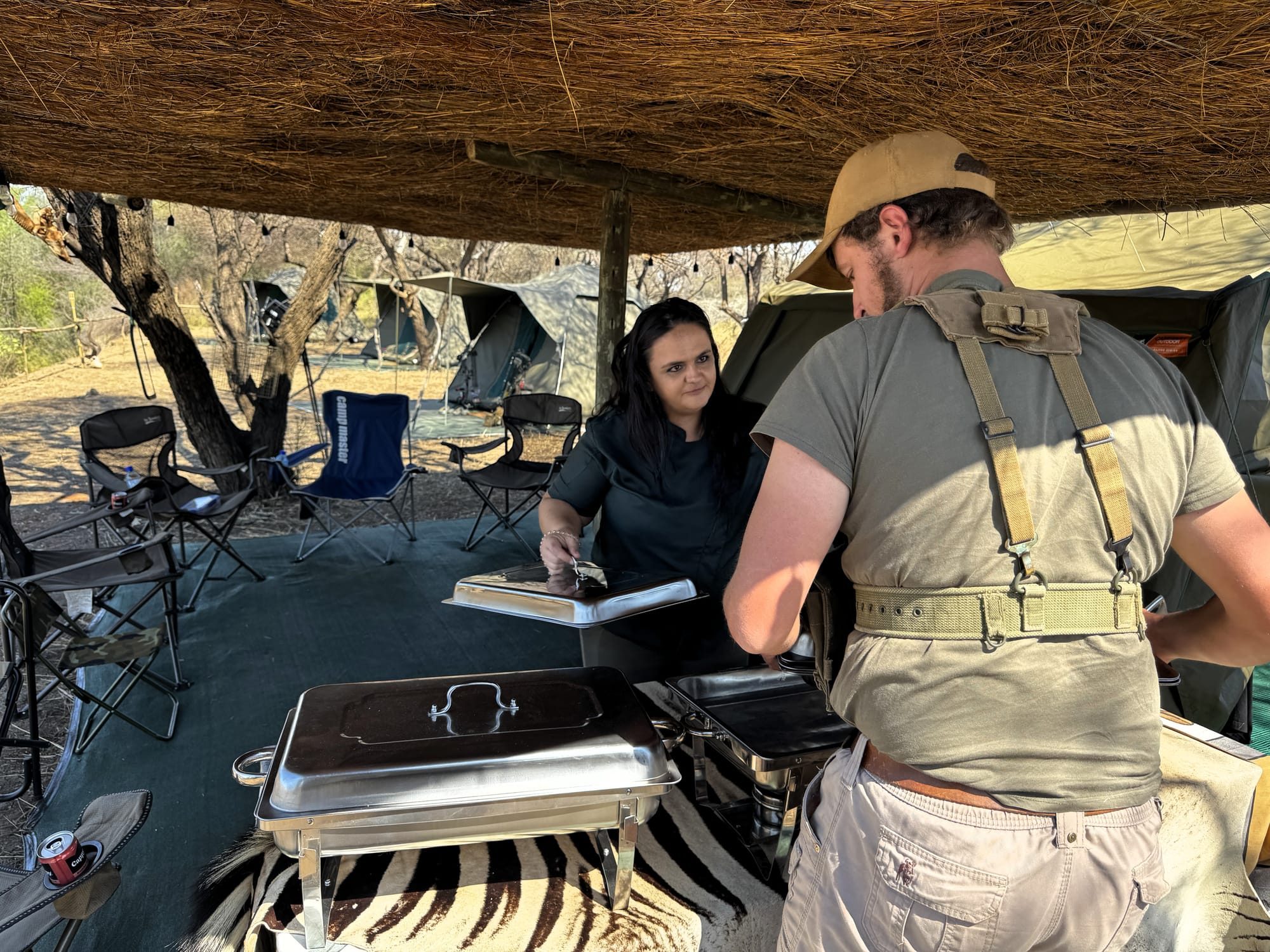
Altus was lean and wiry. He wore either shorts or, when temperatures dropped significantly, a pair of faded stonewashed jeans. His shirt was usually of some indeterminate colour, and around his waist he carried what appeared to be a repurposed military webbing belt complete with shoulder harness and canvas pouches, probably dating back to the South African Army of the 1980s.
Inside those pouches he carried, among other things, at least five different flashlights. At least that was all I managed to count. His skinning knife was taped to the left shoulder strap of the harness for immediate access. Completing the picture was a wild mane of blonde curls, bright blue eyes full of mischief, and an unruly beard.
He was a true hardcore hunting guide, complete with a few eccentric habits, a slightly twisted sense of humor, burning hunting passion, and an unexpectedly soft heart. In other words, exactly the kind of person my son Ernesto would get along with perfectly.
By then, Ernesto had temporarily exchanged his bow for a rifle and had headed out stalking with Altus on a fucking cold and rainy day.
Ernesto hatte mittlerweile den Bogen gegen die Feuerwaffe getauscht und war mit Altus an einem verflucht kalten und regnerischen Tag auf die Pirsch gegangen. Als ich die beiden am Nachmittag wieder sah, nass bis auf die Unterwäsche und von oben bis unten schlammverschmiert und eindeutig nach Dung riechend, mit funkelnden Augen und einem geradezu unverschämten Grinsen auf den Lippen, da wollte ich die Geschichte unbedingt hören.
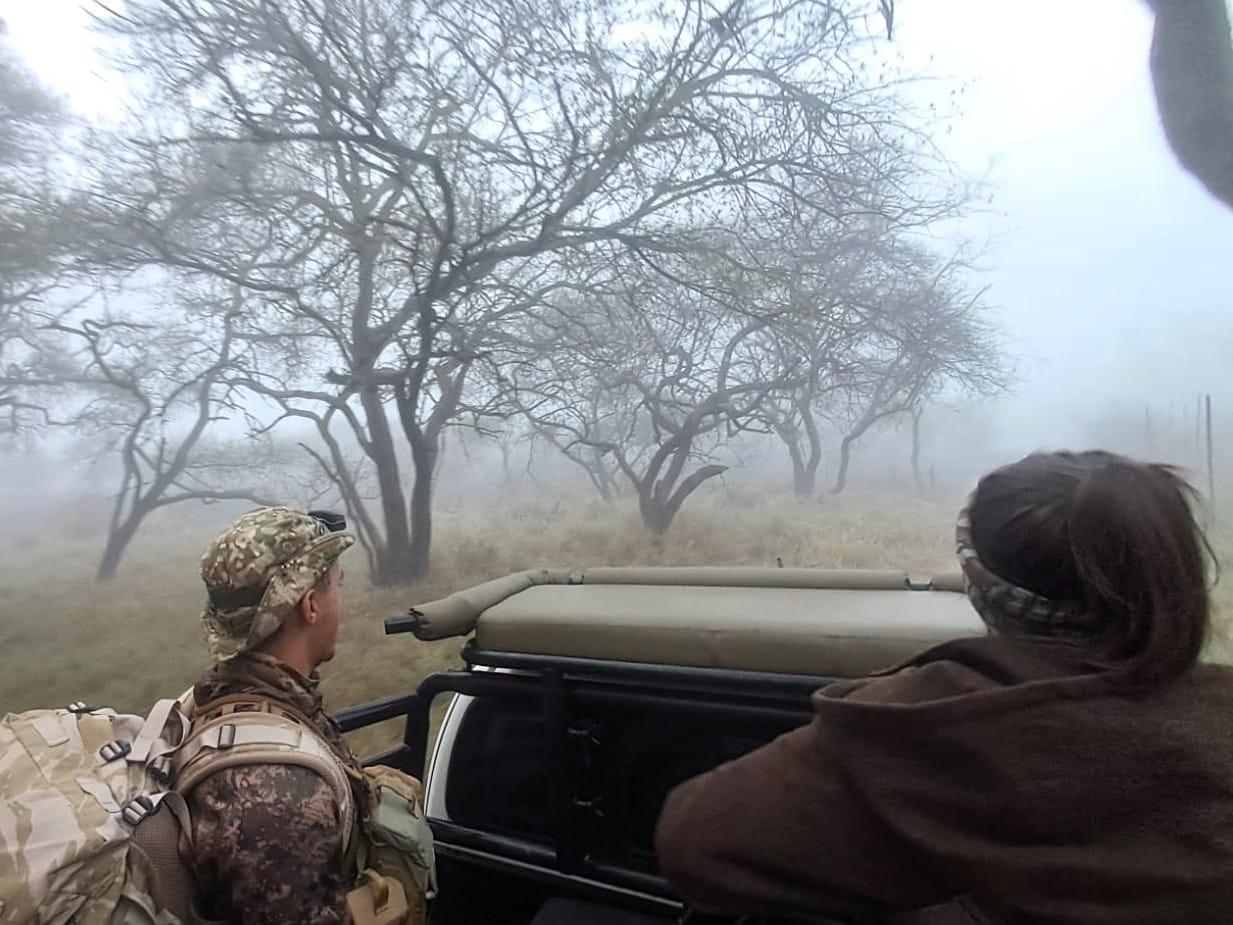
When I saw the two of them again that afternoon, soaked through to their underwear, covered from head to toe in mud, smelling unmistakably of animal dung, and both wearing sparkling eyes and enormous grins, I knew I had to hear the story. They had been dropped off in a section of bushveld suitable for stalking and soon located a herd of approximately forty impalas despite the rain.
For more than an hour they repeatedly tried to work their way into shooting position. This involved moving in the slowest possible manner, often crawling on their bellies through mud and droppings. Every attempt failed. There were simply too many eyes watching. Eventually, they lost contact with the herd.
A short while later, however, Ernesto spotted another group consisting of five impalas and a solitary zebra. With a quiet whistle, he stopped Altus, who was walking ahead of him. Once again, the two men dropped low and carefully advanced through the bush. Unnoticed, they managed to reach a tree that offered excellent shooting support.
The problem was that the animals were standing in thick cover, partially obscured by bushes and by each other. Finally, the zebra took a few steps forward and moved into a small opening at a distance of roughly fifty meters. The opportunity looked promising.
Determined not to make a mistake, Ernesto took extra care. He settled the crosshairs, placed his finger on the trigger, and gradually began building pressure. At precisely that moment, one of the impalas stepped directly behind the zebra. The shot was no longer safe.
For Ernesto, that ended the discussion immediately. He held his position while both hunters watched the animals intently, hoping for another clean opportunity. Minutes passed. Ernesto remained on target, barely breathing. Nothing changed. No safe shot presented itself.
Eventually, the zebra and impala drifted away and disappeared into the bush. Altus then lived up to his reputation. Rolling his eyes dramatically and pulling an exaggerated expression of despair, he directed several theatrical but entirely unserious curses toward the departing impala. The performance was so over the top that Ernesto burst out laughing.
A short time later, Benton arrived with the Land Cruiser. Together they attempted to circle ahead of the animals with the vehicle and launch a second stalk from another direction. But the zebra and impalas had vanished. The bush had won that round.
Michael and the Deep Waters
Michael is a quiet man and, in the best possible sense, a modest one. He neither seeks the spotlight nor feels compelled to prove that he knows everything better than everyone else. This trip marked his first journey to Africa, and I was naturally curious about what had impressed him most during our adventure.
There is a German saying: "Still waters are deep." It suited Michael perfectly. Interestingly, it was not his hunting success that he talked about.
"What impressed me most?" he said.
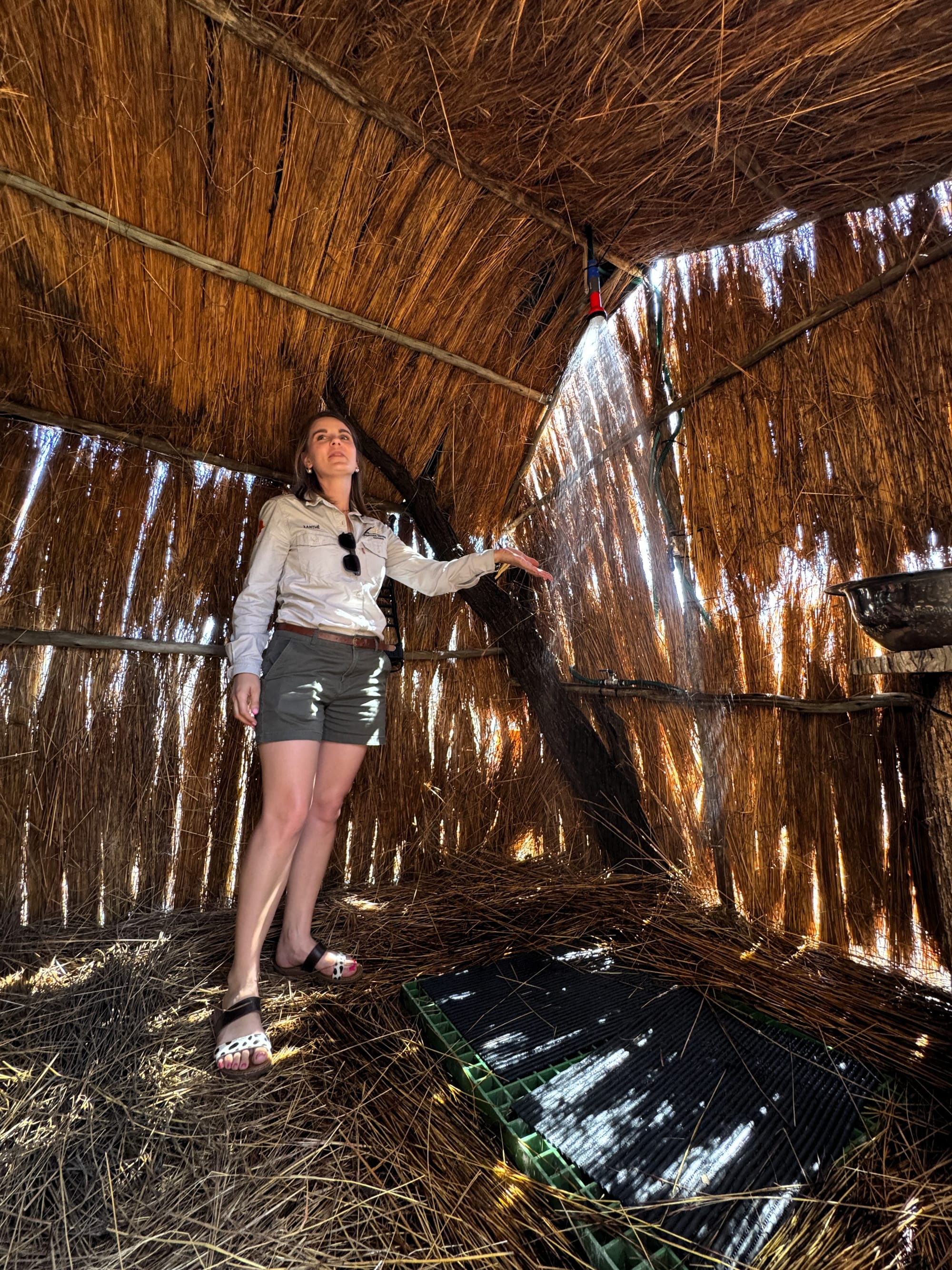
"The way we were welcomed into the family. It felt completely natural. Brenden had his wife and two children with him the entire time. The kids ran around camp, drew pictures for us, and, as true bush children, occasionally sat with us in the blinds barefoot despite the cold weather.
I was never pressured to take a shot. Not even at a baboon standing perfectly broadside, despite the fact that they are considered agricultural pests. For me, that particular shot simply didn't feel right.
Everything the family did was aimed at making our stay as comfortable and safe as possible. This wasn't a business simply processing customers. It was a perfectly coordinated team of people who had found their calling.
What impressed me most was the warmth and sincerity. And I think Brenden's farewell words, that we arrived as guests and left as family, contained a great deal of truth."
I thought about Michael's words for a long time. Of course, on a hunting safari everyone hopes to achieve their hunting goals, take great photographs, and collect exciting stories to tell back home.
But being treated with such genuine warmth and effortless hospitality, far beyond what one would normally expect from good hosts, is something genuinely special. It is not something that can be measured in trophies. And yet, it may be one of the most valuable things a hunter can bring home.
Ernesto's Hyena
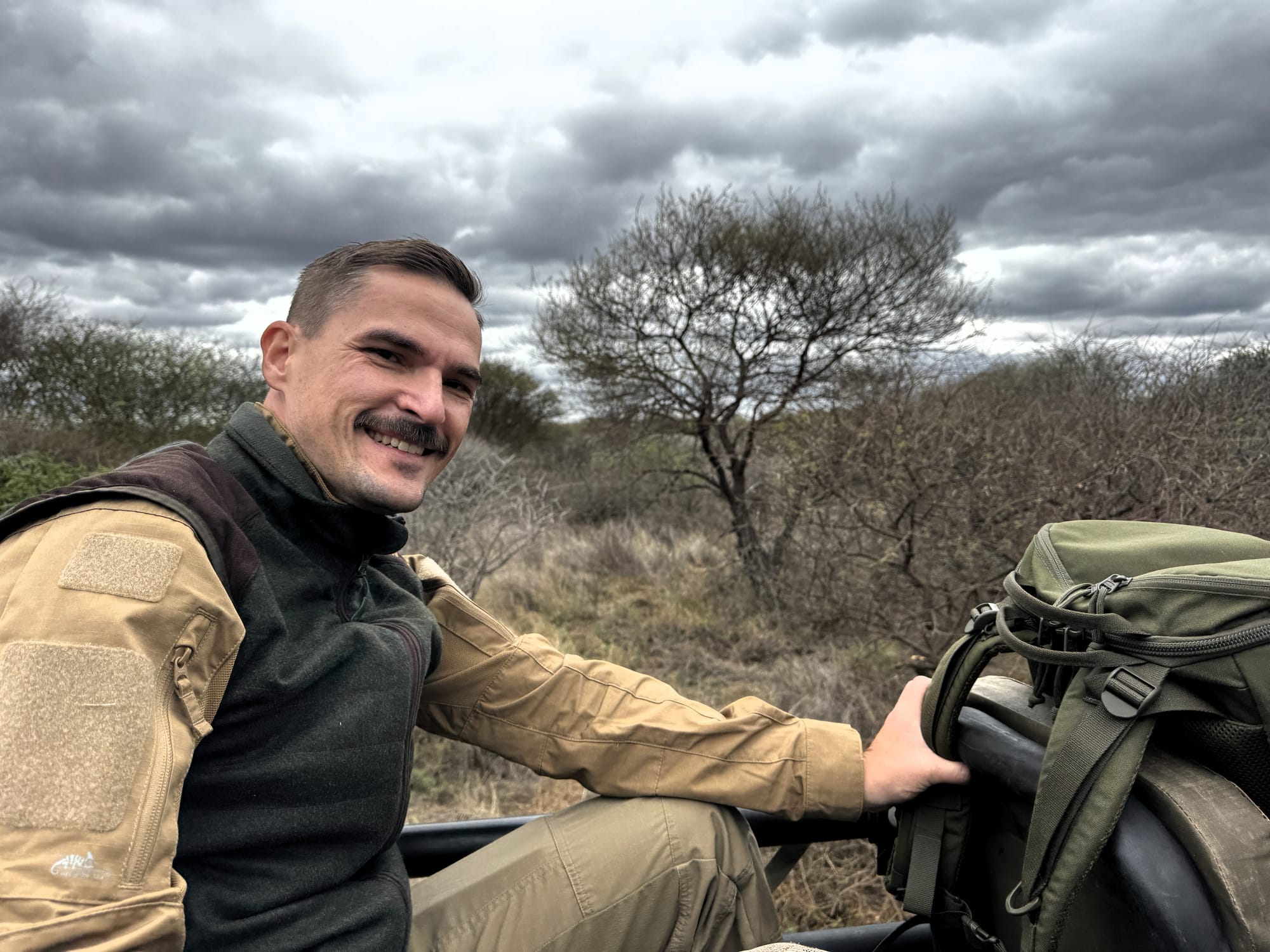
One of my son's long-held dreams was to hunt a hyena. Ever since he was a young boy, Ernesto had accompanied me on countless hunting trips in Hungary and Spain, many of which took place at night. We had spent countless evenings practicing with the bow under low-light conditions, and by now he was consistently placing hunting arrows accurately out to thirty meters, even in difficult lighting.
Africa, however, proved to be a different challenge altogether. The weather turned the long nighttime vigils over bait sites into a genuine test of endurance. Cold rain, persistent wind, and uncomfortable temperatures made every outing a struggle. To make matters worse, not a single hyena appeared at any of the carefully prepared bait sites, despite evidence that they had been actively visiting them beforehand.
As the final day of our safari approached, Brenden and Armand decided to go the extra mile. At their own expense, they arranged for a specialist predator caller whose expertise lay in bringing Africa's nocturnal carnivores into shooting range by imitating the distress calls of wounded animals.
Even on the last evening, the weather remained cold and wet. Before heading out, Ernesto fired several practice shots with his rifle to ensure he was fully prepared for what would likely be his final opportunity. The specialist's name was Klaus.
With his wire-rimmed spectacles, he bore a remarkable resemblance to the Coca-Cola Santa Claus illustrations from the 1930s, albeit without the beard. His vehicle was exceptionally well equipped and clearly reflected years of experience in predator hunting.
Accompanied by Altus, Ernesto climbed onto the back of Klaus's truck, and together they headed into the bush. Dusk was settling across the African landscape when the first calls finally produced a response.
A brown hyena materialized among the bushes. Klaus immediately reduced the volume of his distress calls, allowing the animal's curiosity to draw it closer. The hyena approached cautiously before finally sitting down at a distance of approximately one hundred meters.
Its large ears moved constantly, sweeping through the air like radar dishes as it attempted to pinpoint the source of the sound. Ernesto was already in position. He settled behind the rifle, took careful aim, and squeezed the trigger.
At the shot, the hyena reacted violently, leaping high into the air before instantly disappearing behind the surrounding vegetation. The three hunters remained where they were and waited. Twenty long minutes passed before they cautiously moved toward the point of impact.
By now, darkness had fallen completely. Using their flashlights, they soon found the exact location where the animal had been standing. A few small drops of blood confirmed that the shot had connected, and the sign indicated the direction in which the hyena had fled. The follow-up, however, quickly reached an impasse.
After only a short distance, the blood trail entered an area covered in dense thorn thickets and tall grass, almost impossible to penetrate. A wounded hyena in such terrain presents a very serious danger to anyone attempting a night-time recovery. In dense cover, visibility is minimal, and wounded carnivores can become highly aggressive.
The professional hunters had no intention of exposing themselves, or my son, to that level of risk. Reluctantly, they suspended the search until daylight. The next morning, we were already on our way to the airport when the message finally arrived from Klaus.
"Hyena found, this morning. Distance travelled approximately 250 metres. Carcass heavily scavenged by other carnivores. Weidmannsheil!."
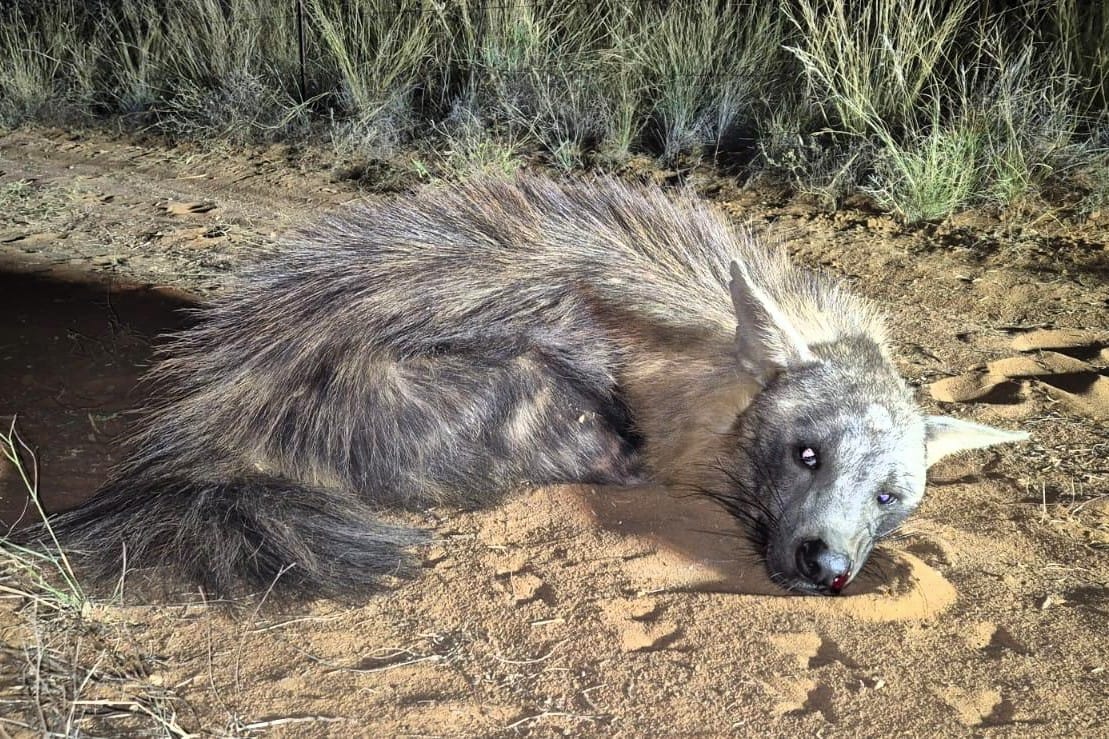
The relief was enormous. After years of dreaming about it, Ernesto had finally achieved his goal. Not under easy conditions. Not with luck alone. But through perseverance, preparation, and a willingness to endure cold, rain, and disappointment right up until the final evening of the hunt. That made the success all the more meaningful.
Matthias Warthog
Africa has a unique ability to capture a hunter's imagination. Like most of us, Matthias arrived with a picture of the continent already formed through books, stories, films, and countless hunting accounts. Yet seeing Africa with your own eyes, breathing its air, and experiencing its atmosphere firsthand is something entirely different. The endless landscapes, the incredible wildlife, and the feeling of being immersed in the bush quickly took hold of him.
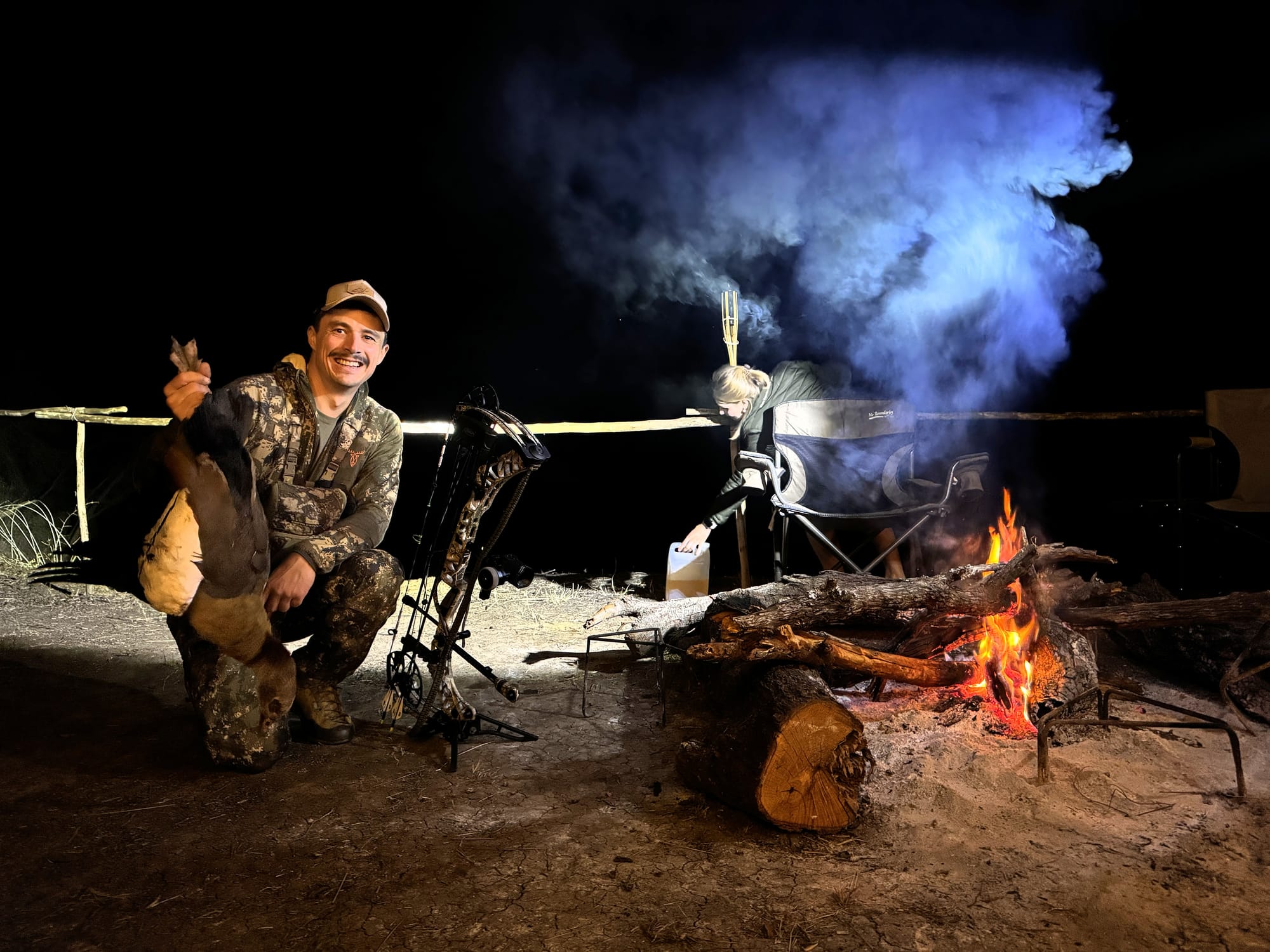
Like so many visitors before him, he soon became infected with what hunters jokingly call the "African virus." His personal highlight of the trip occurred on the third day.
The temperatures were cool, and a constantly shifting breeze gusted across the landscape. Sitting in a blind covered with dried grass and branches, Matthias watched the surroundings through a narrow shooting window. Birds moved constantly around the waterhole. Calls from various animals drifted from the bush. The scent of sun-dried grass filled the air.
Earlier, a solitary baboon had visited the waterhole. Despite having a shot opportunity, Matthias chose not to shoot. He wanted to avoid disturbing the area. Brenden, who was accompanying him that day, simply raised a thumb in approval. It proved to be exactly the right decision.
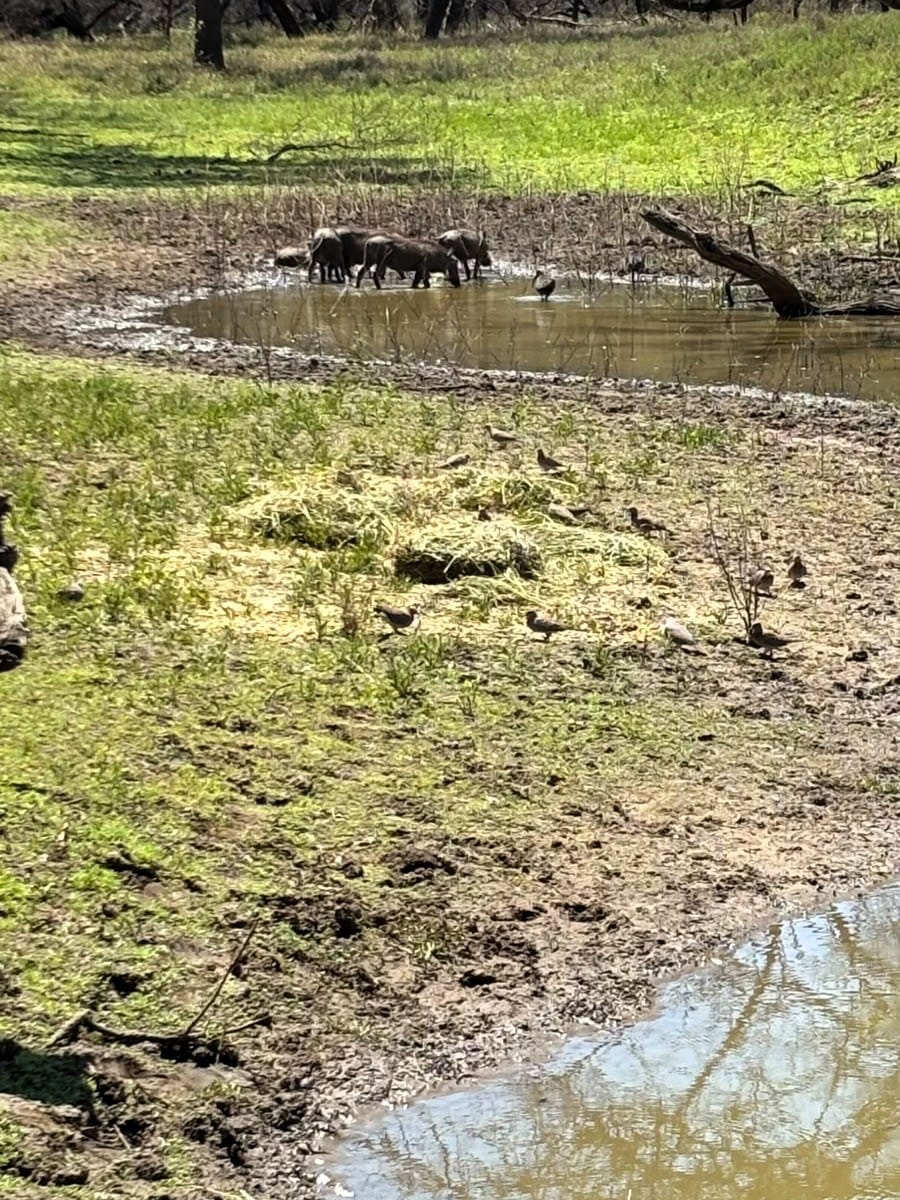
Only a short time later, three warthog piglets suddenly emerged from the tall grass as though they had appeared from nowhere. Close behind followed two sows, likely accompanied by their first litter.
Watching the playful antics of the little family would have been entertaining enough. But there was another visitor. Standing motionless at the edge of the grass, partially concealed behind a thorn bush, a mature boar was carefully watching the waterhole. Brenden saw him at the same moment.
Both men locked their eyes on the animal. Neither said a word. Both understood the problem immediately. The wind! Again and again, unpredictable gusts swirled through the area from different directions.
The boar was visibly nervous. He advanced a few steps. Stopped. Retreated several more. Froze. Then repeated the entire process.
What felt like an eternity passed before he finally stepped clear and stood broadside at twenty metres from the blind. At last, he lowered his head toward the water. But yet another problem emerged. Two of the piglets were standing directly behind him. Any ethical shot was impossible.
Matthias fought to control his breathing and lower his heart rate. He waited. Patiently. The piglets continued to wander around behind the boar. Then finally, movement. The youngsters drifted away. The boar remained standing broadside, now noticeably relaxed and glancing toward the sows.
No words were needed. Matthias looked toward Brenden. The professional hunter's familiar smile had returned. He nodded. Matthias slowly drew his bow. Just as he had practised a thousand times before.
The arrow launched from the darkness of the blind, clearly visible as it streaked toward the boar. It passed effortlessly through the animal and kicked up a plume of sand behind it as it struck the ground. There was no audible impact.
The warthog exploded into motion, bolting away like a greased lightning bolt and disappearing into the tall grass. The rest of the pigs vanished just as quickly. "The warthog is down, he is down!" Matthias whispered excitedly toward Brenden. Brenden simply nodded, still smiling.
The boar had travelled less than sixty meters. The perfectly placed double-lung shot had done its work. There he lay now, almost peacefully, and an enormous burden seemed to lift from Matthias' shoulders. An engineer by profession and a perfectionist by nature, he had been determined not to make a mistake, especially on this opportunity. Now he was overjoyed that, despite the difficult conditions, he had delivered a perfect shot at exactly the right moment.
Later, Matthias reflected on the experience:
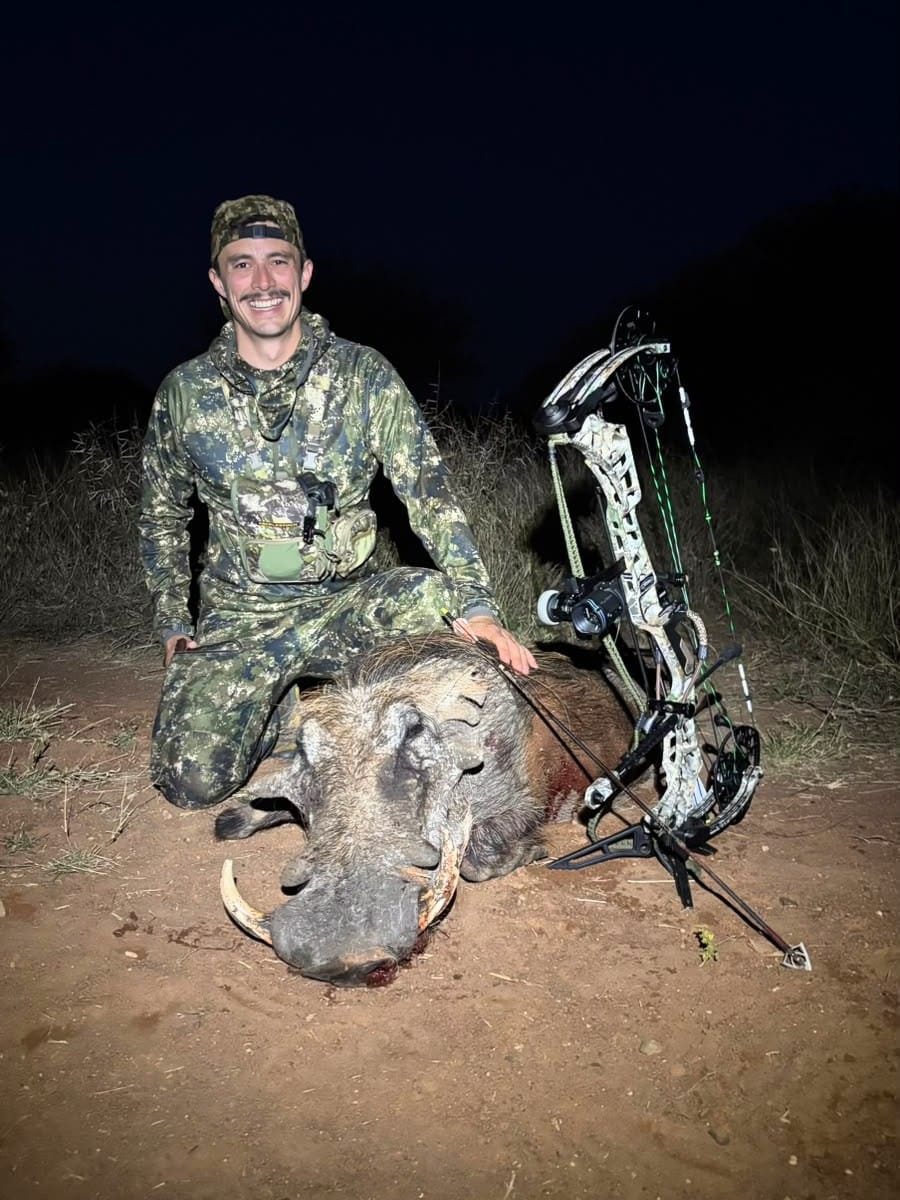
"It wasn't just the twenty meters or the successful shot that made the day so special. It wasn't even that it was my first warthog. It was the patience, the tension, the closeness to the animal, and ultimately the overwhelming joy of sharing that moment with a hunting companion that made it unforgettable."
Sophies Story
Sophie joined our hunting group somewhat unexpectedly.
She is Matthias' girlfriend and a dedicated hunter in her own right, although she prefers a rifle over a bow. Originally, the trip had been planned exclusively for bowhunters, but there was no reason she couldn't join us. So, at relatively short notice, Sophie decided to come along.
Through her grandfather, who had spent several years working as a master butcher in South Africa and Namibia, she had heard many stories about the continent. Not all of them were positive, and she arrived both excited and somewhat apprehensive about how reality would compare with her expectations.
As she later told me, the first thing that impressed her was the warmth, kindness, and genuine care shown by Brenden, his family, and the entire team.
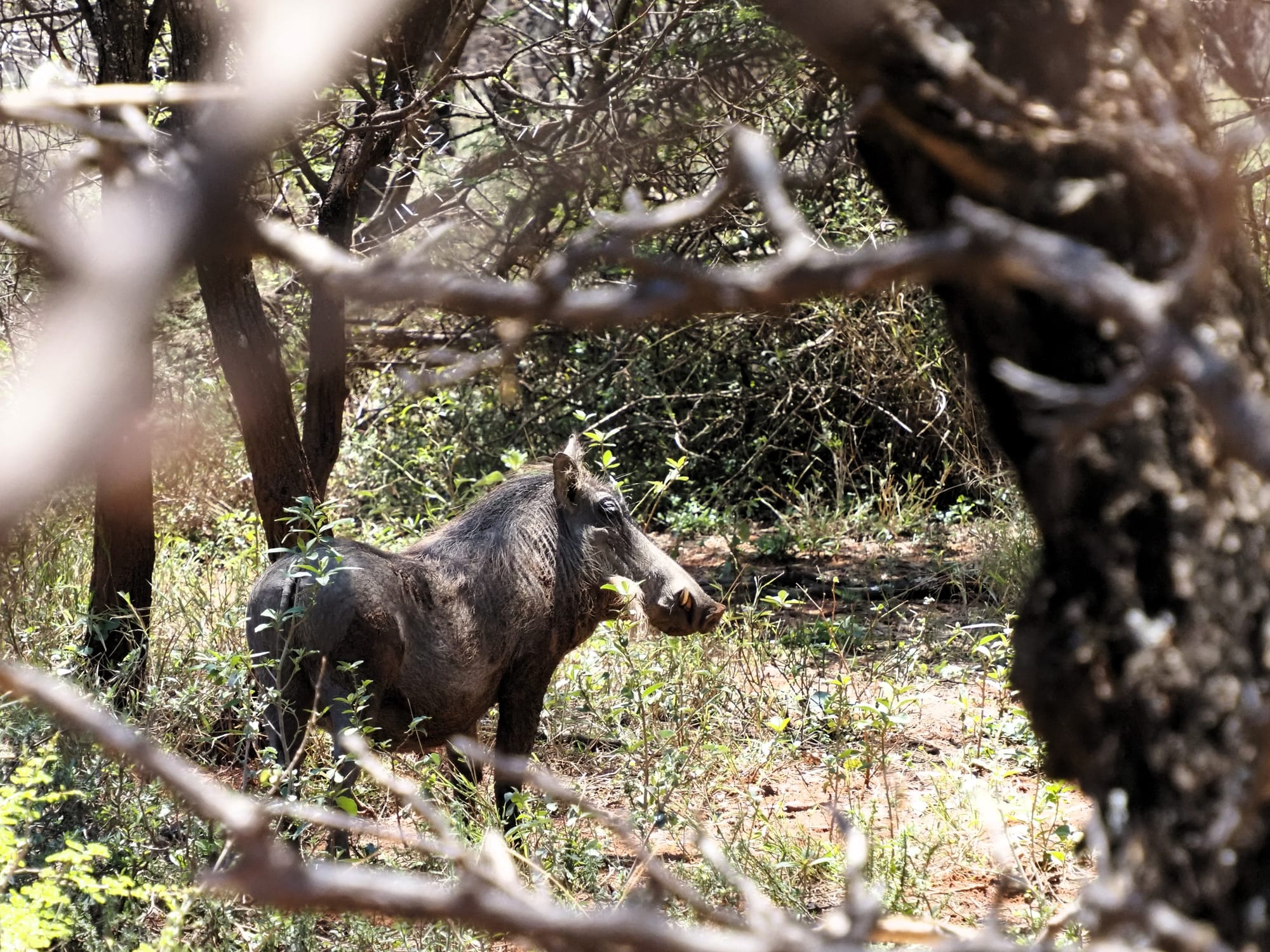
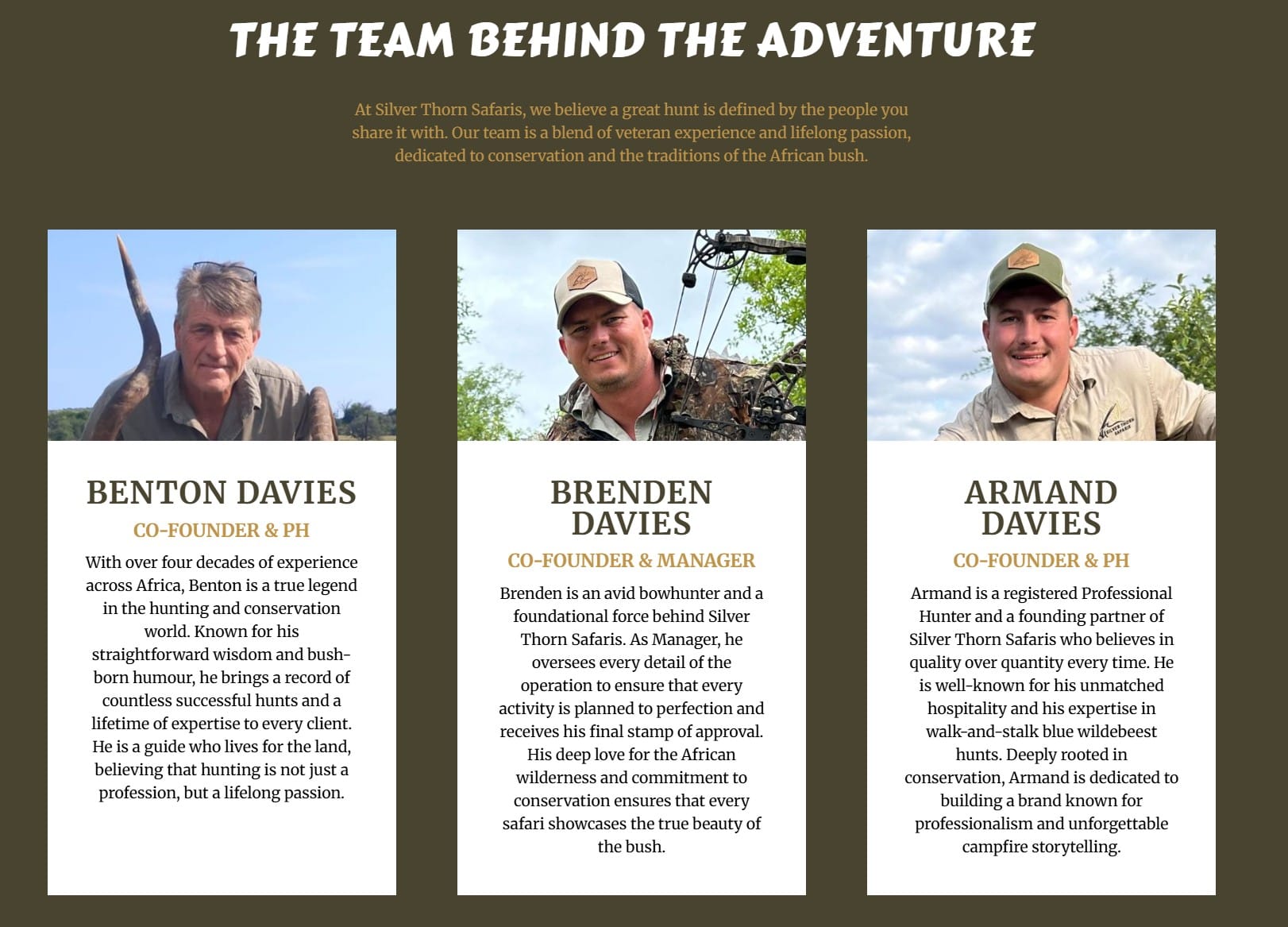
Sophie's guide was Armand, Brenden's younger and somewhat quieter brother, as well as his partner in Silver Thorn Safaris.
Unlike Brenden, Armand tends to stay in the background when guests are around. However, the gleam in his eye reveals a mischievous sense of humour. Like his brother, he is not only a guide but also a highly accomplished archer and bowhunter. During the many practice sessions on 3D targets set up throughout the bush, he repeatedly demonstrated his skills.
What Armand and Brenden unquestionably share is their determination to make their clients' wishes a reality while providing an exciting and adventurous hunt without ever compromising on safety. Those are Sophie's words, not mine.
As with the rest of us, the rain, cold weather, and shifting winds made hunting difficult for Sophie as well. Armand alternated between walk-and-stalk hunting and sitting in blinds. Whenever he felt a particular approach wasn't producing results, he immediately adjusted the strategy.
One evening around the campfire, he informed Sophie that he wanted to explore a completely new area the following morning. Before ten o'clock the next day, Sophie's fitness watch had already recorded more than 16,000 steps.
Unlike previous days, the weather had finally improved. The sun was out, temperatures were rising, and there was no rain. Eventually, the two hunters decided to settle into a blind overlooking a waterhole.
Several cattle were present around the waterhole. They had escaped from the farm's fenced grazing area a few days earlier and had yet to be rounded up. Sophie found this somewhat surprising. Armand, however, saw it as a promising sign. He was right.
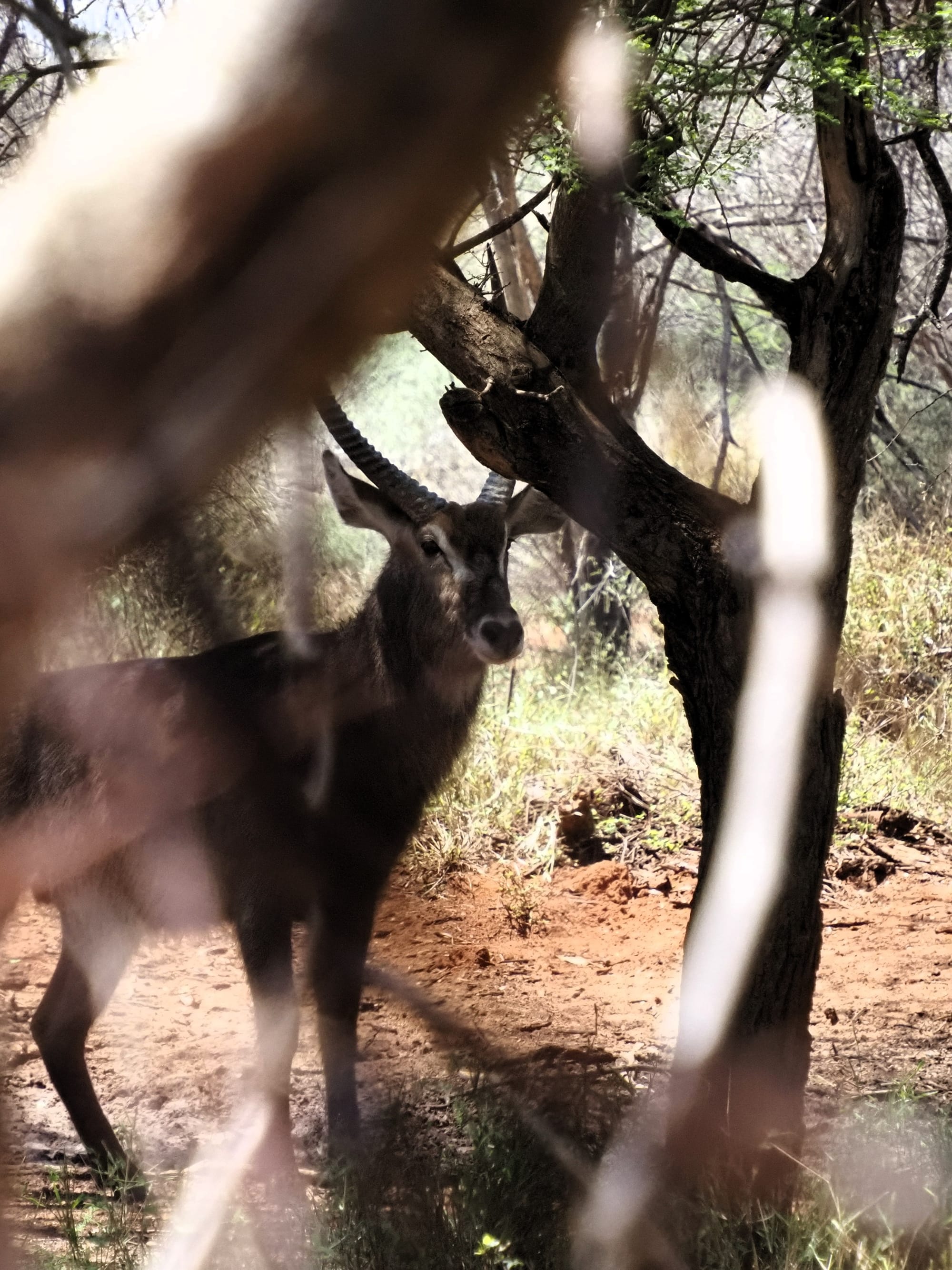
Soon two female warthogs appeared and began moving among the cattle. One of them was clearly favoring a front leg and moved with a noticeable limp. Unfortunately, no shooting opportunity presented itself without risking the cattle.
The two hunters could do nothing but watch. After both sows had drunk their fill and spent time wallowing, the healthy animal eventually wandered back toward the bush. At that moment, Armand touched Sophie's elbow and quietly signaled for her to get ready.
He pointed to a gap between the waterhole and the tall grass where the first sow had disappeared. His plan was simple: if the second sow followed the same route, he would stop it with a whistle.
Moments later, the limping sow began moving in exactly that direction. Armand whistled sharply. Nothing. The sow continued walking. He whistled a second time. This time she stopped and looked back. Sophie was already on target. She exhaled slightly, squeezed the trigger, and fired.
The sow reacted clearly to the impact and disappeared through the bushes and tall grass in a series of rapid bounds. Armand looked at Sophie, gave a satisfied thumbs-up, and flashed his broadest smile. After waiting fifteen minutes, they approached the point of impact. The sign was unmistakable. Bright, frothy lung blood.
The sow had travelled less than ten meters before collapsing behind the first line of bushes. She was already dead when they found her. During the recovery, they discovered why the animal had been limping. The hoof capsule on the damaged leg was completely missing. The exposed stump was bloody and badly injured.
For Sophie, this transformed the hunt into something even more meaningful than any trophy could ever be.
She had not only taken an animal cleanly and ethically but had also spared it from prolonged suffering that would almost certainly have resulted from infection and eventual decline.
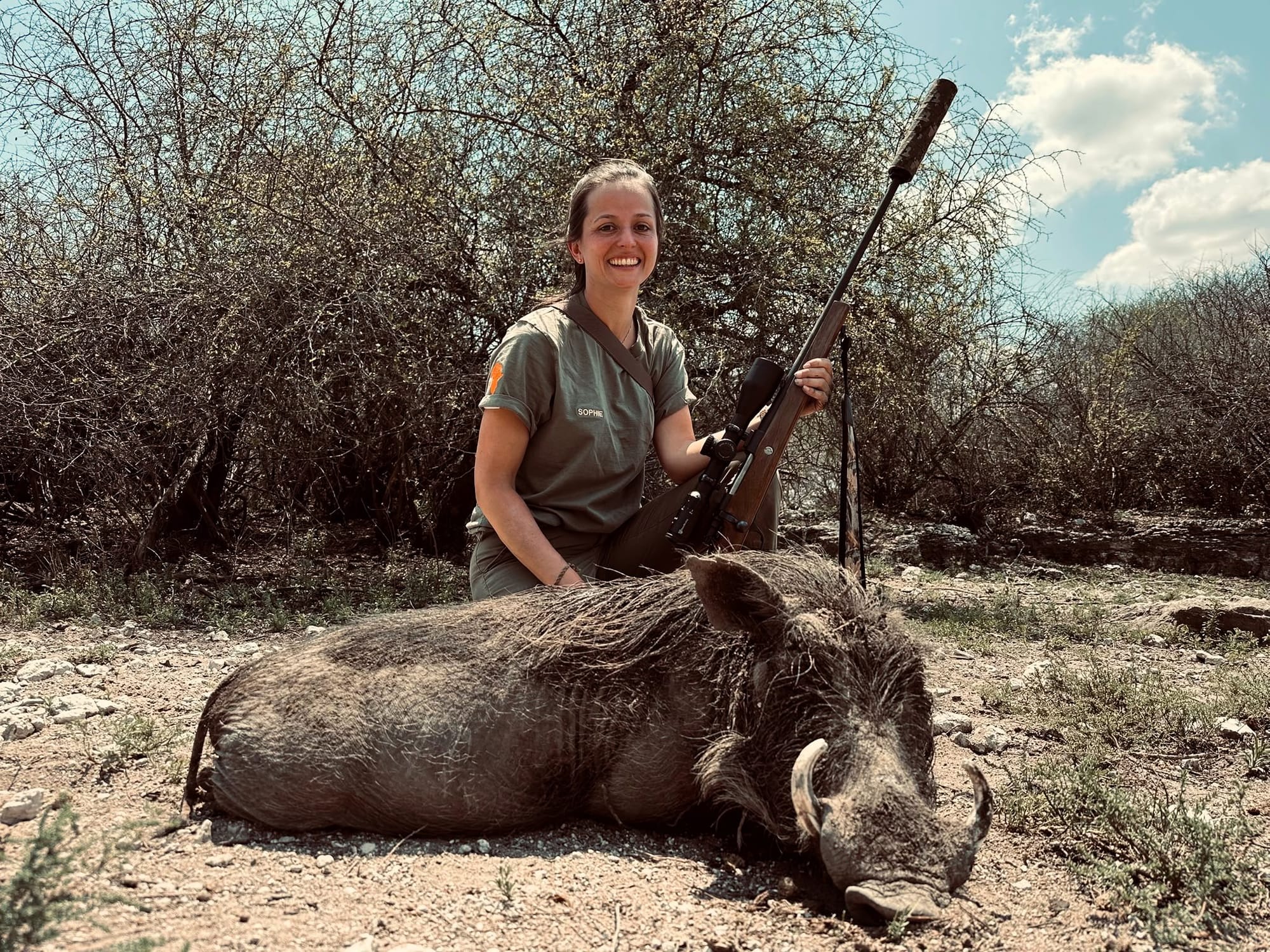
Sophie's final assessment of the safari is something I will remember for a long time:
"One thing I'll definitely take home from this trip is the realization that hunting can be an enormous challenge even with a rifle. When conditions aren't perfect, wildlife doesn't always behave as expected. But that's exactly what hunting is all about. And one thing is certain: this definitely wasn't my last hunting trip with Silver Thorn Safaris."
Was It Really a Perfect Hunting Trip?
The answer is simple: Yes and no. Let's begin with the negatives.
The weather was fucking dreadful. Had conditions been hot and dry, with consistent winds, we undoubtedly would have seen more game and enjoyed even greater hunting success.
On the other hand, those same miserable conditions contributed enormously to the atmosphere of our camp. Sitting together around the fire, listening to rain drumming on canvas tents while the Limpopo flowed past below us, created memories that might never have existed under perfect weather.
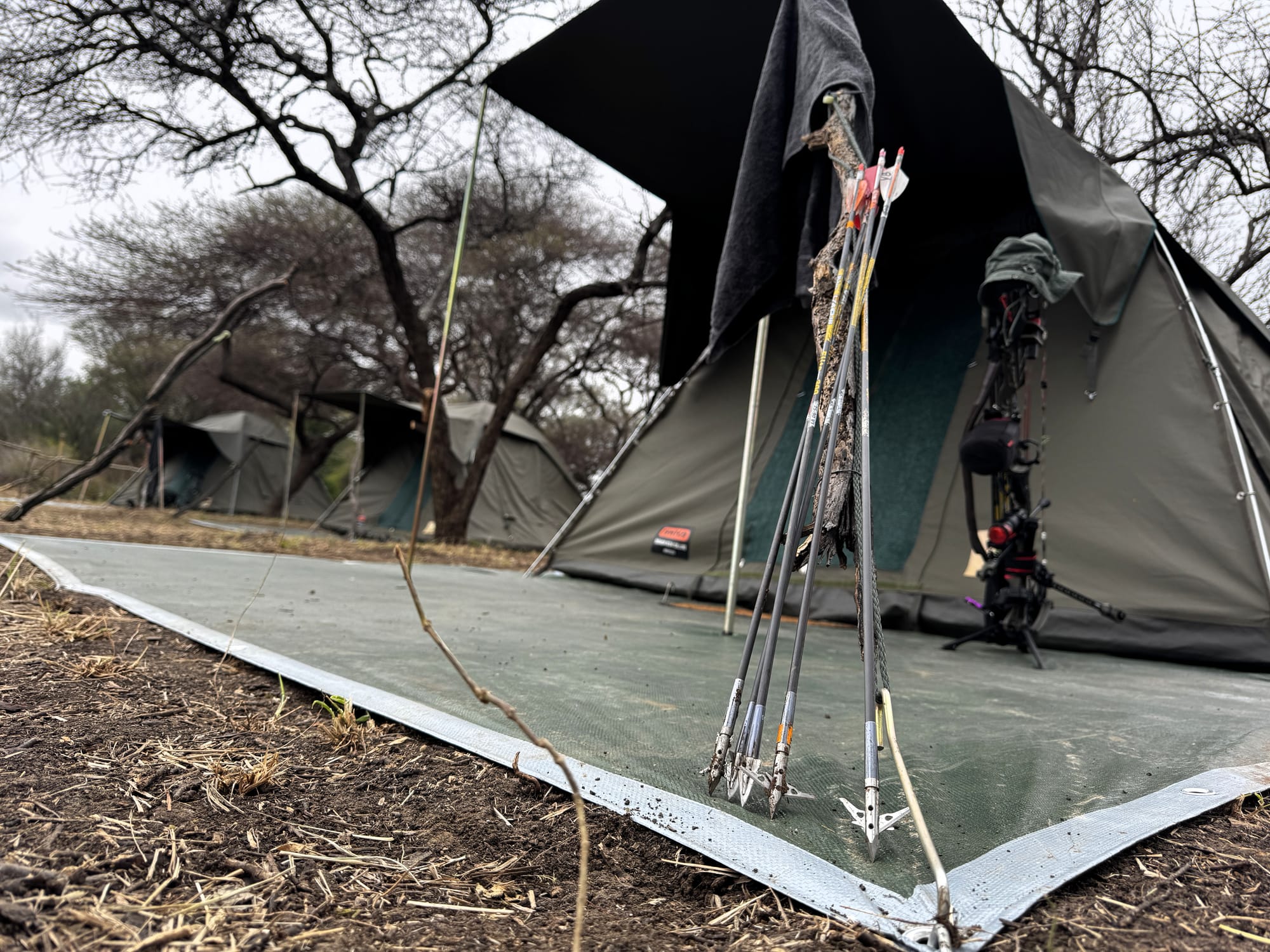
Additionally, there were leopards in the area. Several of us heard their cough-like barking for hours at a time, often alarmingly close by. Their presence made much of the game understandably cautious and difficult to hunt. But that is part of hunting in truly wild country.
This was not a high-fence shooting operation where success is guaranteed. Another issue became apparent during the trip. Some farm owners and outfitters, particularly those one operating in the mountain concessions, simply lack sufficient understanding of bowhunting. Facilities and hunting setups designed exclusively for rifle hunters are rarely ideal for archery equipment.
It is something I will pay even greater attention to when organizing future trips, and it is also a point that Brenden himself openly acknowledged. On the positive side, however, the list is considerably longer.
First and foremost, both the hunting party and our hosts were exceptional. This is how hunting and travel should be!
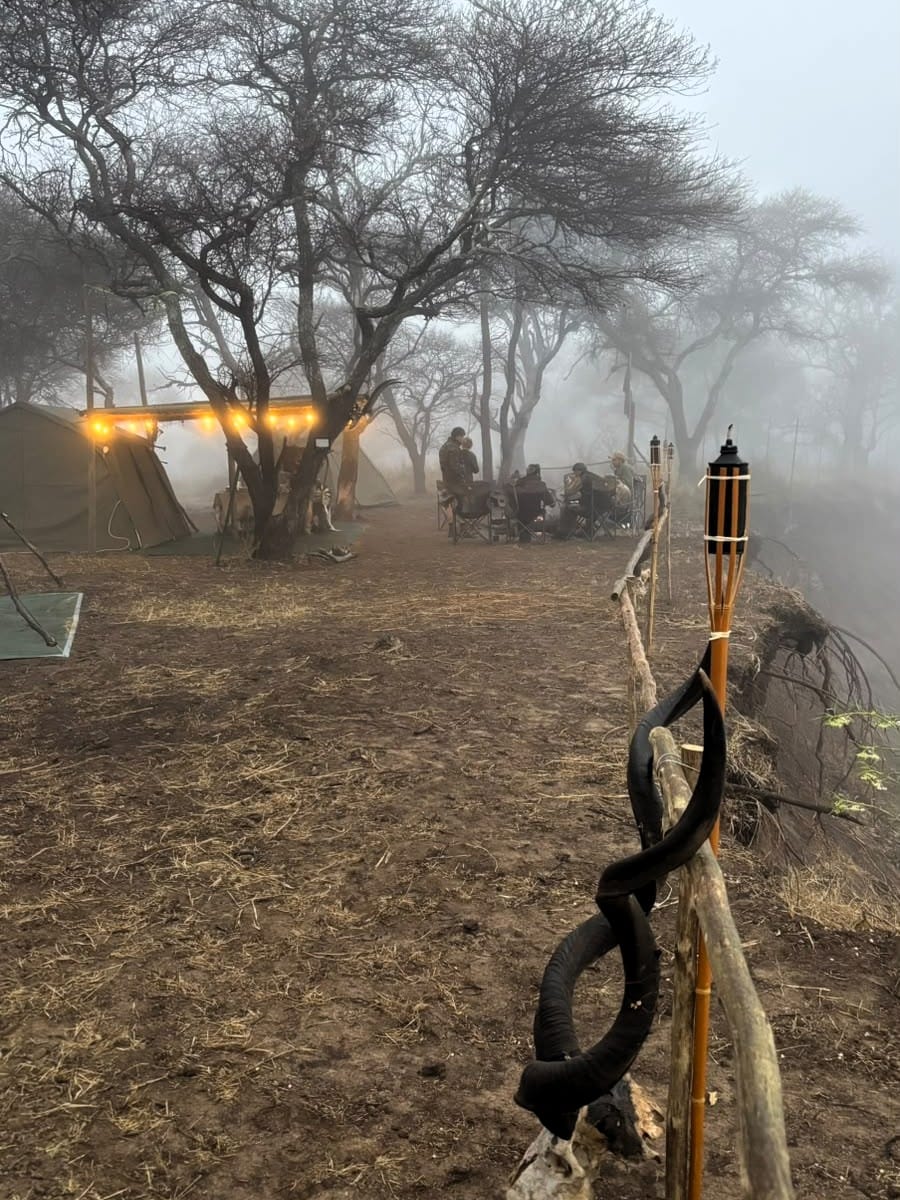
I am convinced that this will not be our last hunt together.
Secondly, the adventure factor was everything I had hoped for. We experienced genuine wilderness, slept in tents on the banks of a crocodile-infested river, listened to baboons and leopards in the darkness, and navigated mud, rain, and challenging hunting conditions.
Yet despite all of that, there was never a moment when either guests or hosts found themselves in serious danger.
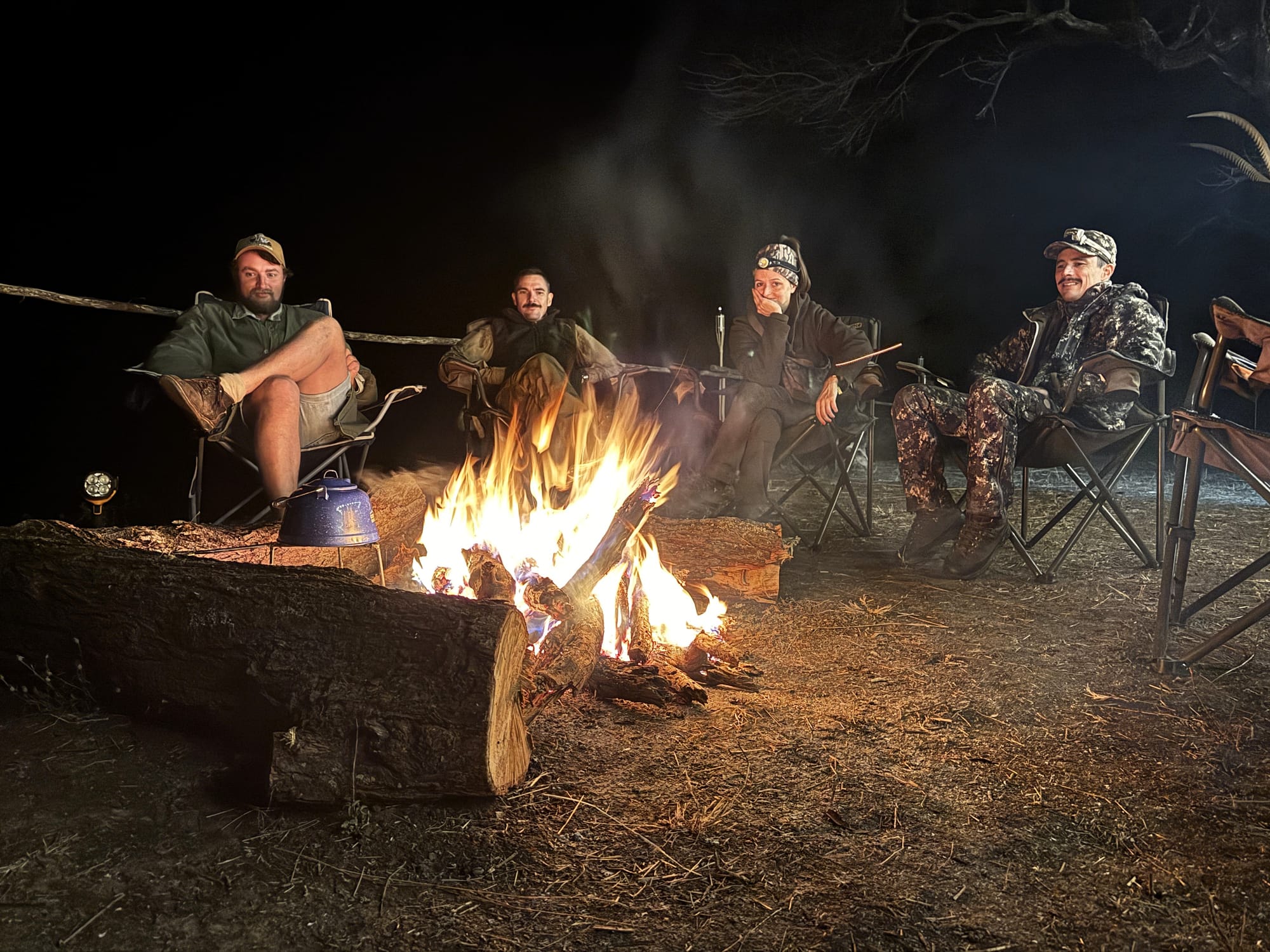
We did not manage to tick every item off our bucket lists. And yet everyone left satisfied with their hunting success and eager for more. Most importantly, every one of us returned home carrying unforgettable memories.
For my part, I am already looking forward to the next adventure that I will organize together with Silver Thorn Safaris.